Modern types of curtain hooks range from simple S-hooks and ring clips to specialized track gliders and magnetic hooks. Choose based on curtain heading, rod or track type, fabric weight, and desired look — then match material and size for strength and smooth operation.
Key Statistics
- Over 60 percent of homeowners prefer slide or glider systems for heavy drapes in living spaces.
- Lightweight rings and clips account for roughly 30 percent of modern quick-install solutions.
- Typical weight capacity ranges: 2 to 12 kg per hook depending on material and design.
Quick overview of modern curtain hook types
Curtain hooks today combine function and style. They must hold fabric, allow smooth movement, and match the room aesthetic. Here we summarize common modern types and when to use them.
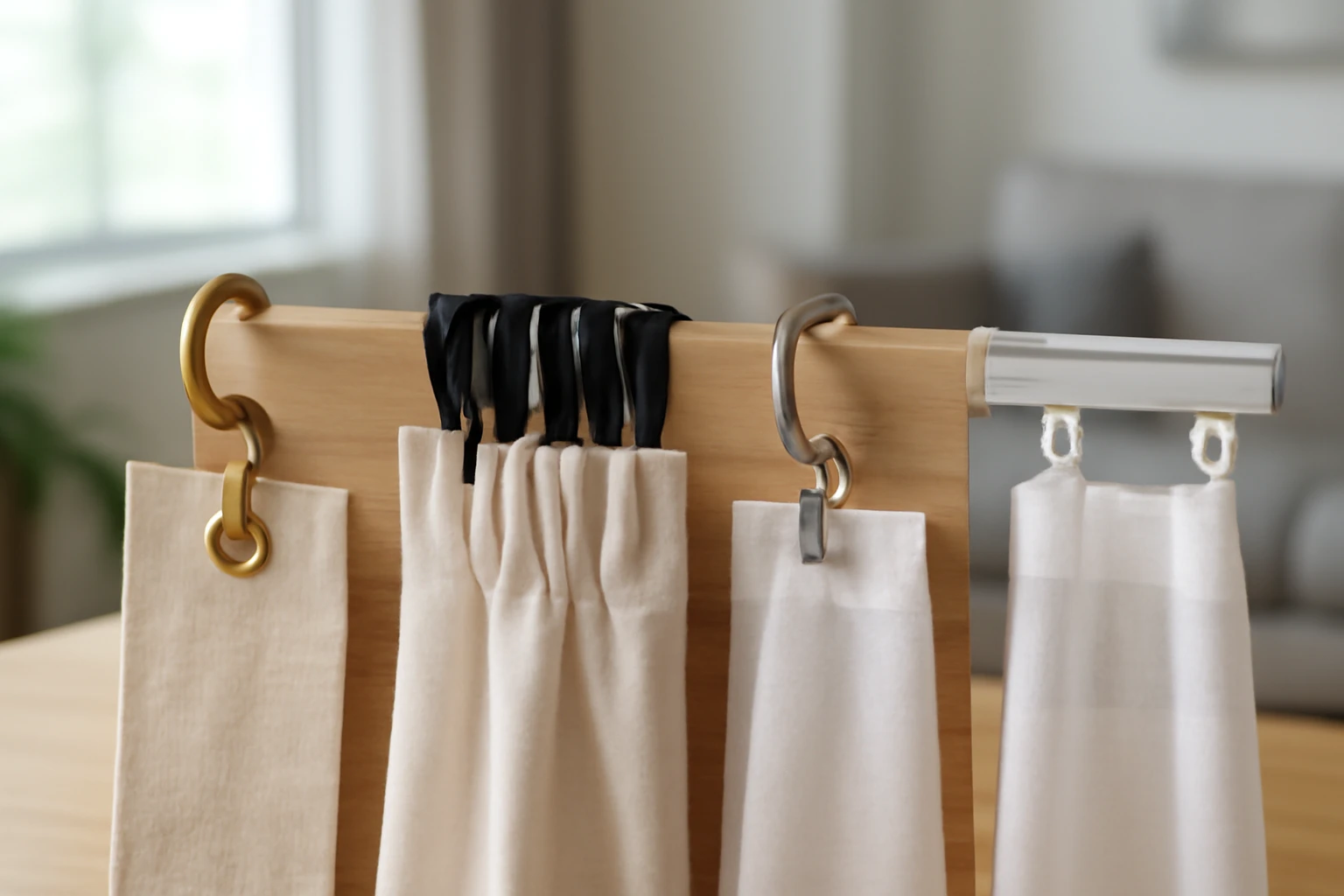
Detailed types and how they work
Below are the main modern types of curtain hooks, how each attaches, and the visual result it creates on a curtain.
S-hooks (S-shaped curtain hooks)
S-hooks are simple metal hooks shaped like an S. They hang from a rod or ring and hook into curtain headers, hems, or eyelets.
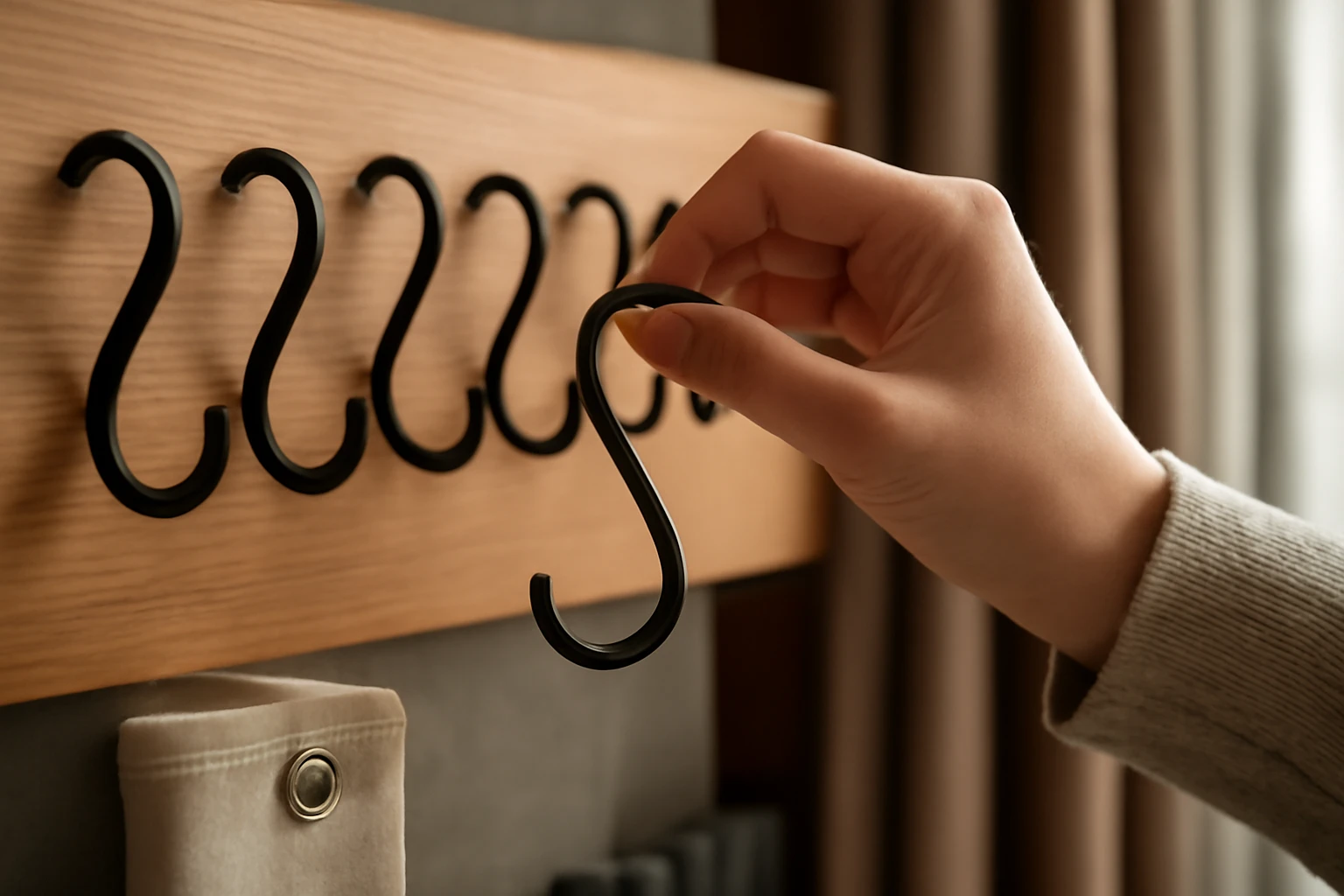
S-hooks are popular because they are cheap and easy to reposition. They work well with lightweight to medium fabrics and offer a casual look. A common mistake is using thin S-hooks with heavy drapery; pick a heavier gauge for weighty curtains.
Ring clips and curtain rings
Ring clips are metal or plastic rings with attached clips that grip the curtain top. They are clipped to fabric or header tape.
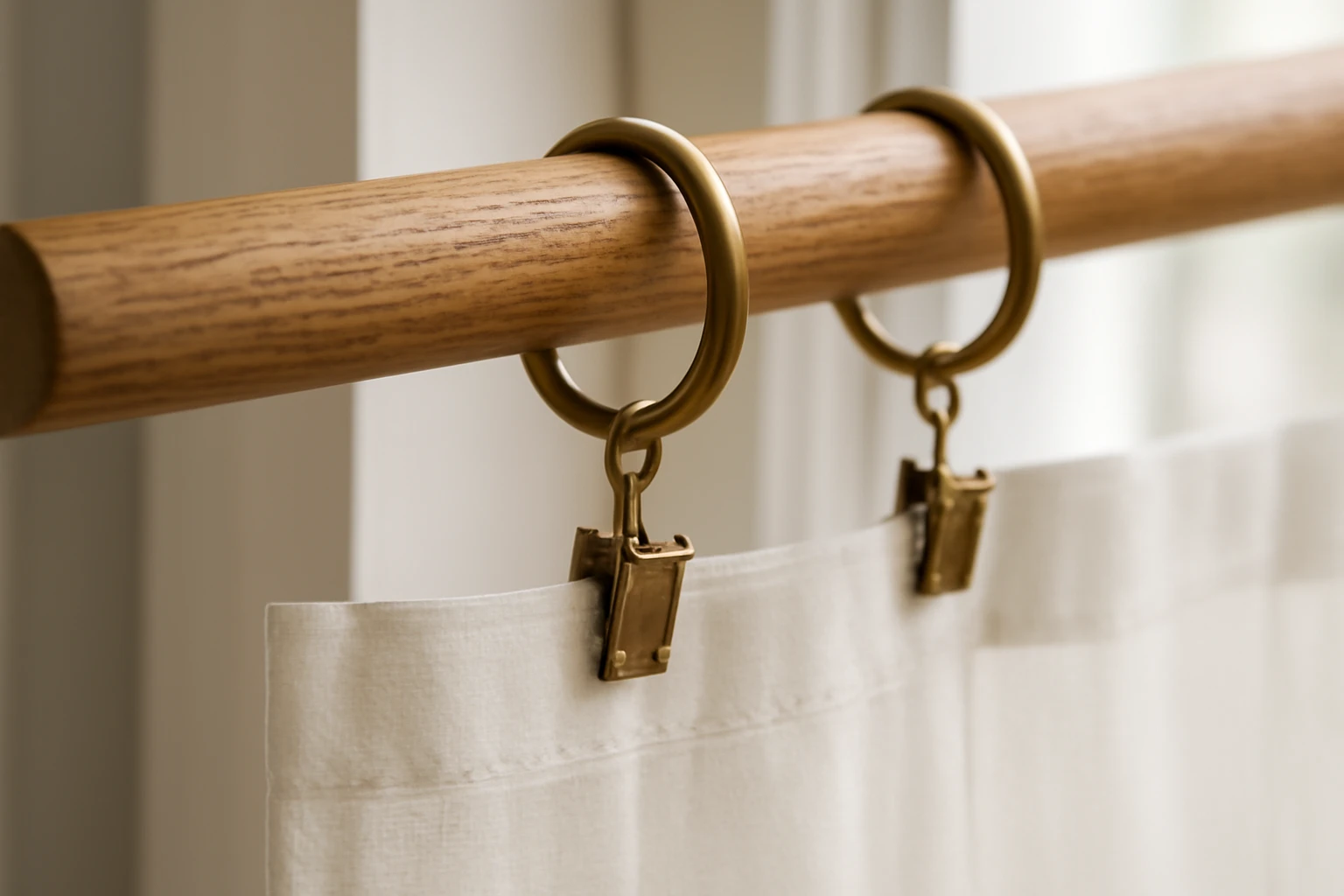
Ring clips allow quick installation and adjustable spacing. They suit casual or modern interiors and work with rods that accept rings. For heavy fabrics, choose metal rings and reinforced clips.
Pinch pleat hooks (pleater hooks)
Pinch pleat hooks attach into the back of a pleated heading and then to rings or gliders to create structured folds.
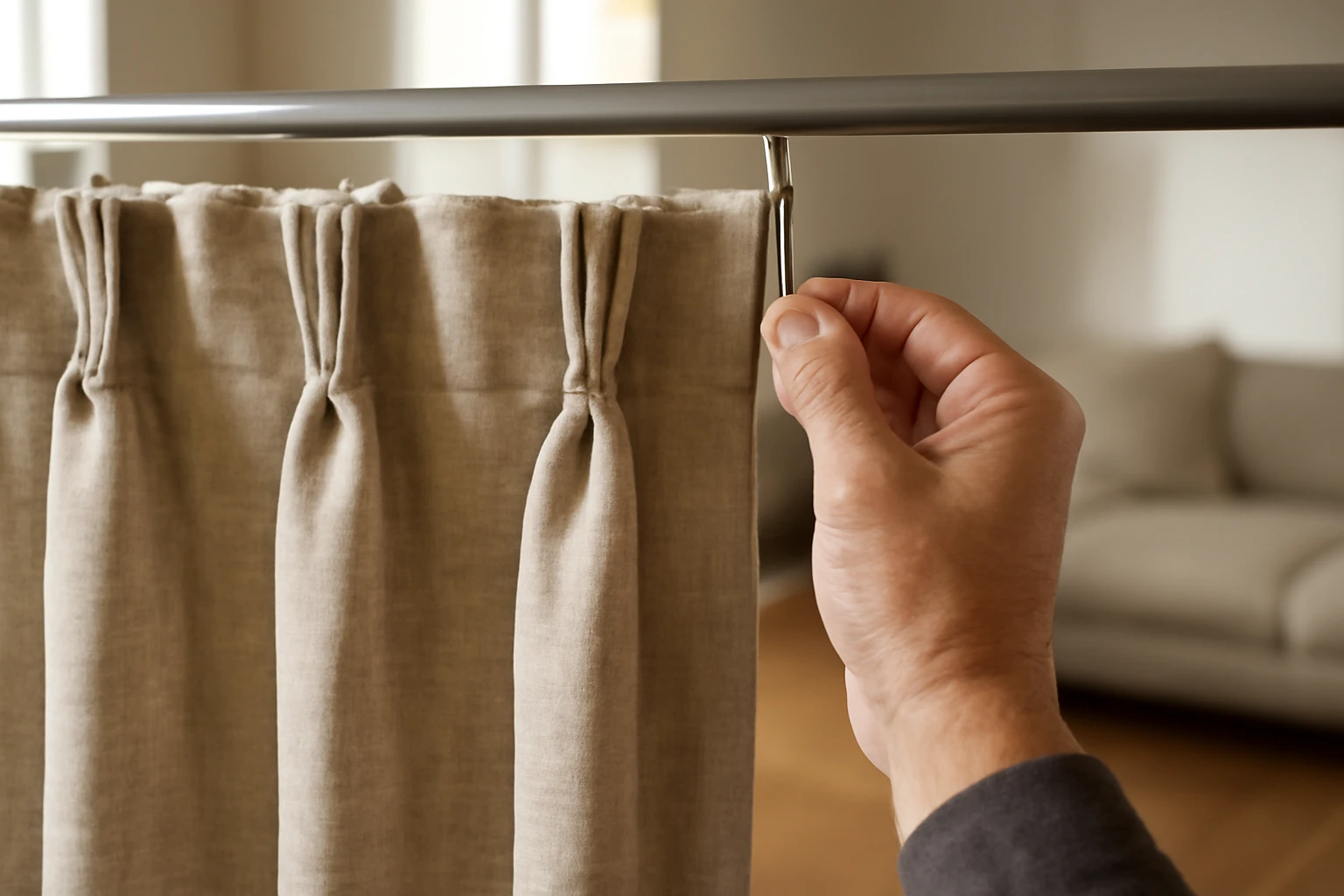
Pinch pleat hooks are the classic choice for formal drapes. They create neat, even pleats and distribute weight well. Use them with heavy rods or tracks rated for the curtain weight.
Eyelet or grommet-style fittings
Eyelet curtains have metal rings built into the fabric edge that slide directly over a rod. Technically they are not “hooks” but they are a modern alternative.
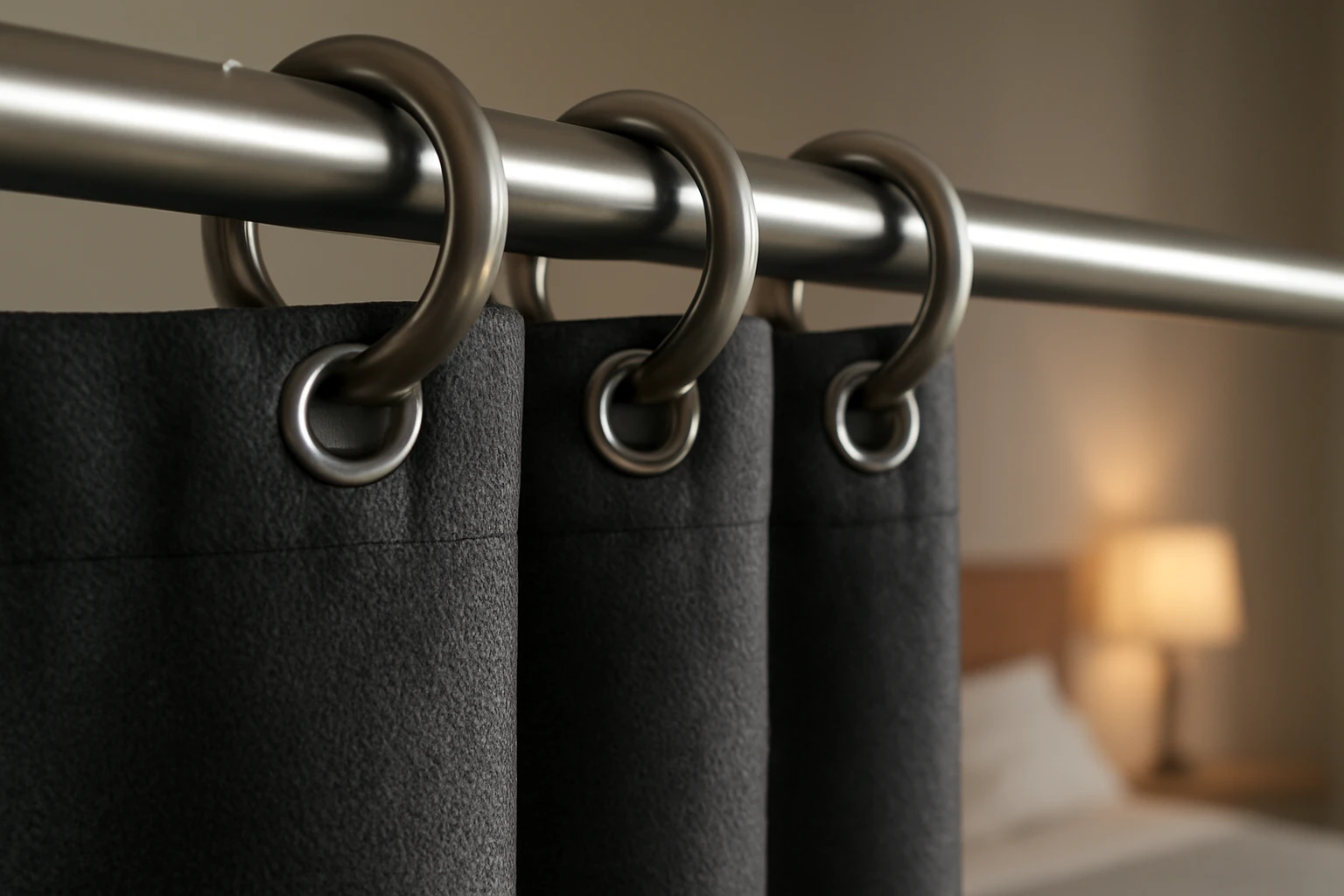
Eyelets give a clean, modern look and quick sliding. They are best on thicker fabrics that hold the eyelet without tearing. Use reinforced hems for long-term durability.
Track gliders and runners
Track systems use small gliders or runners that clip or hook into the curtain header and slide in a ceiling or wall-mounted track.
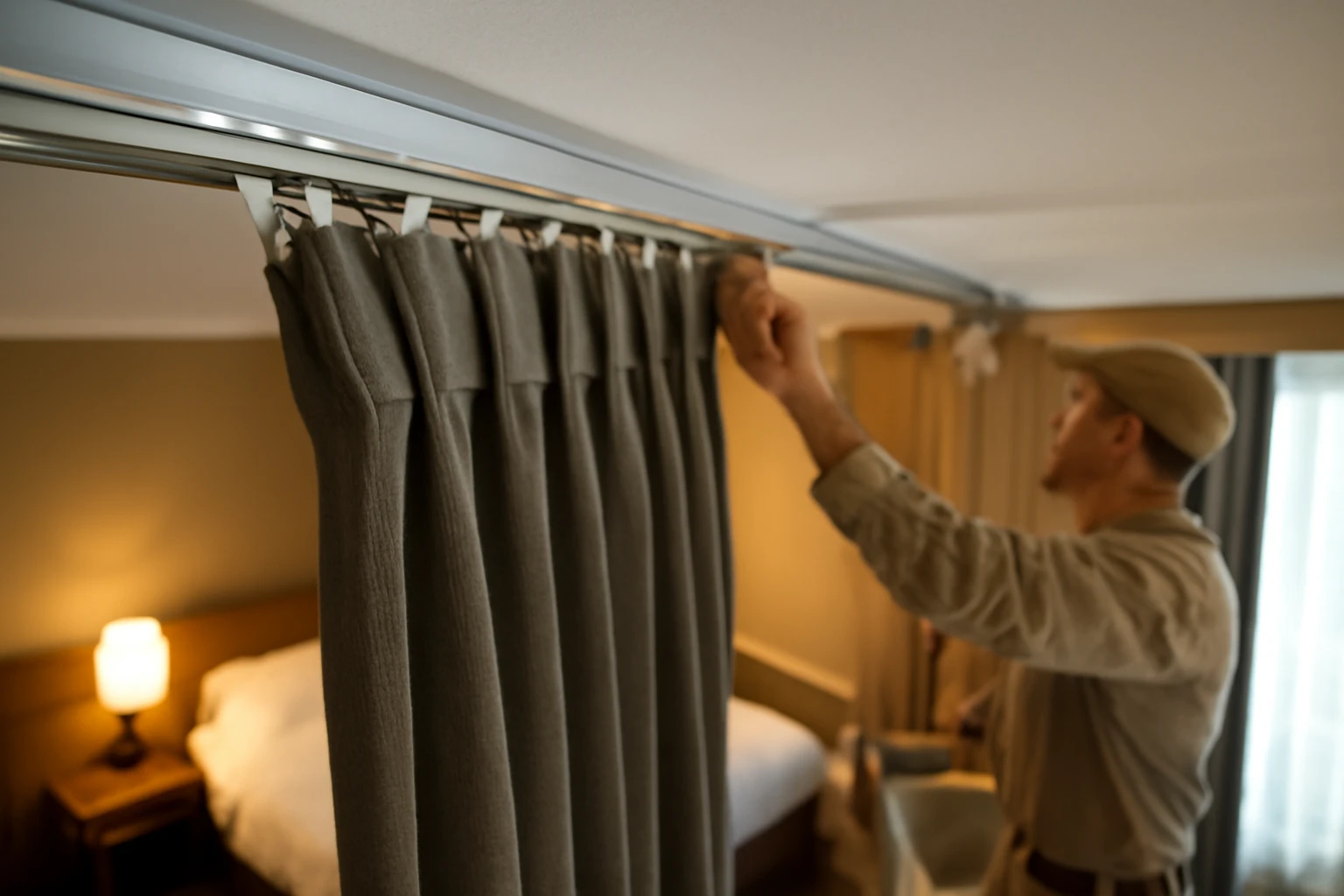
Tracks handle heavy drapes smoothly and are ideal for large windows, curved bays, and blackout curtains. They allow precise control and often include carriers for motorization.
Wave hooks and tape systems
Wave hooks are used with wave heading tape. The hooks sit behind the header and create continuous soft waves with minimal visible fixings.
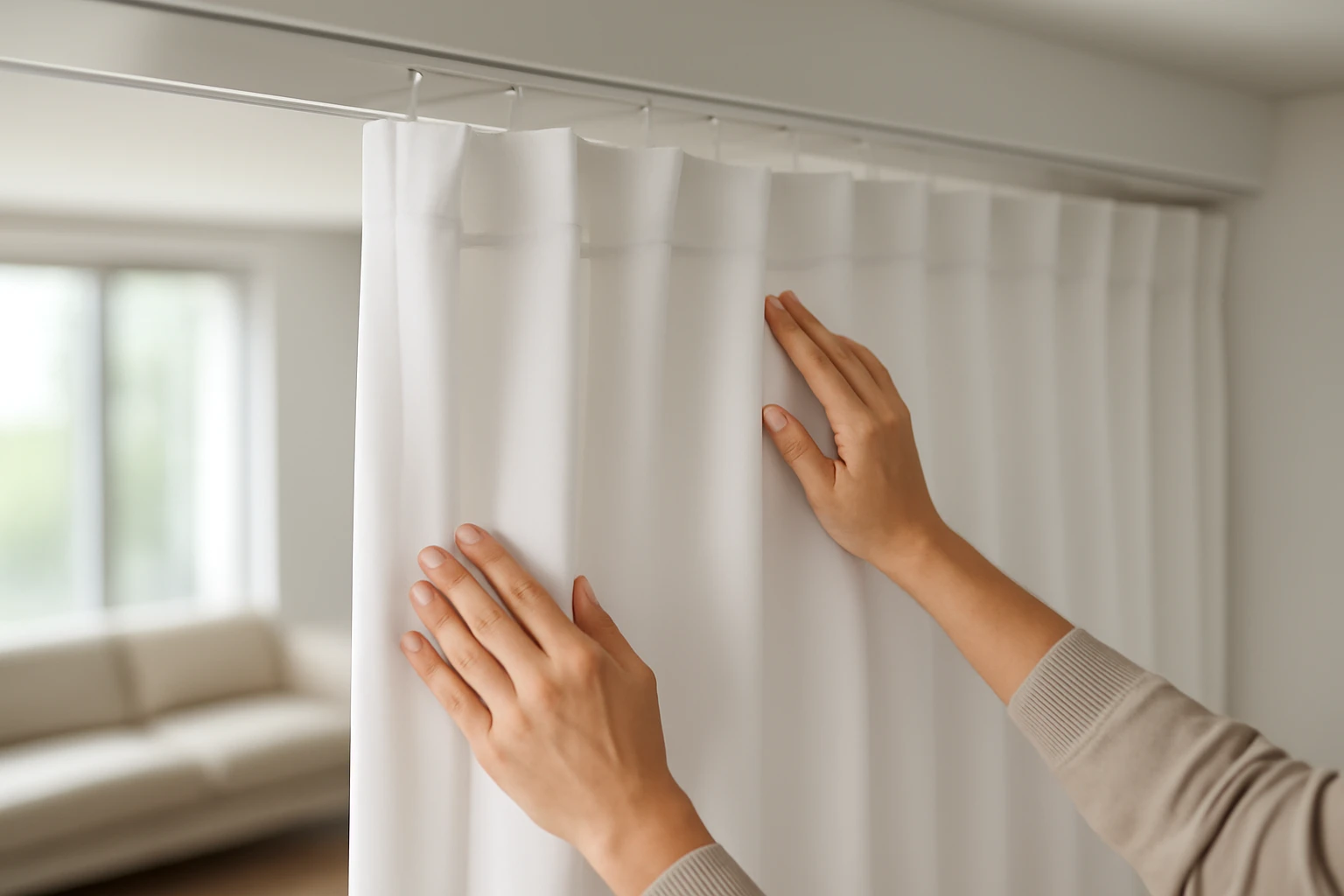
Wave systems suit contemporary interiors and work well with lightweight to medium fabrics. They demand precise spacing and compatible tracks or rods.
Magnetic and clamp hooks
Magnetic hooks attach to metal rods or frames without drilling. Clamp hooks grip the rod and allow easy repositioning.
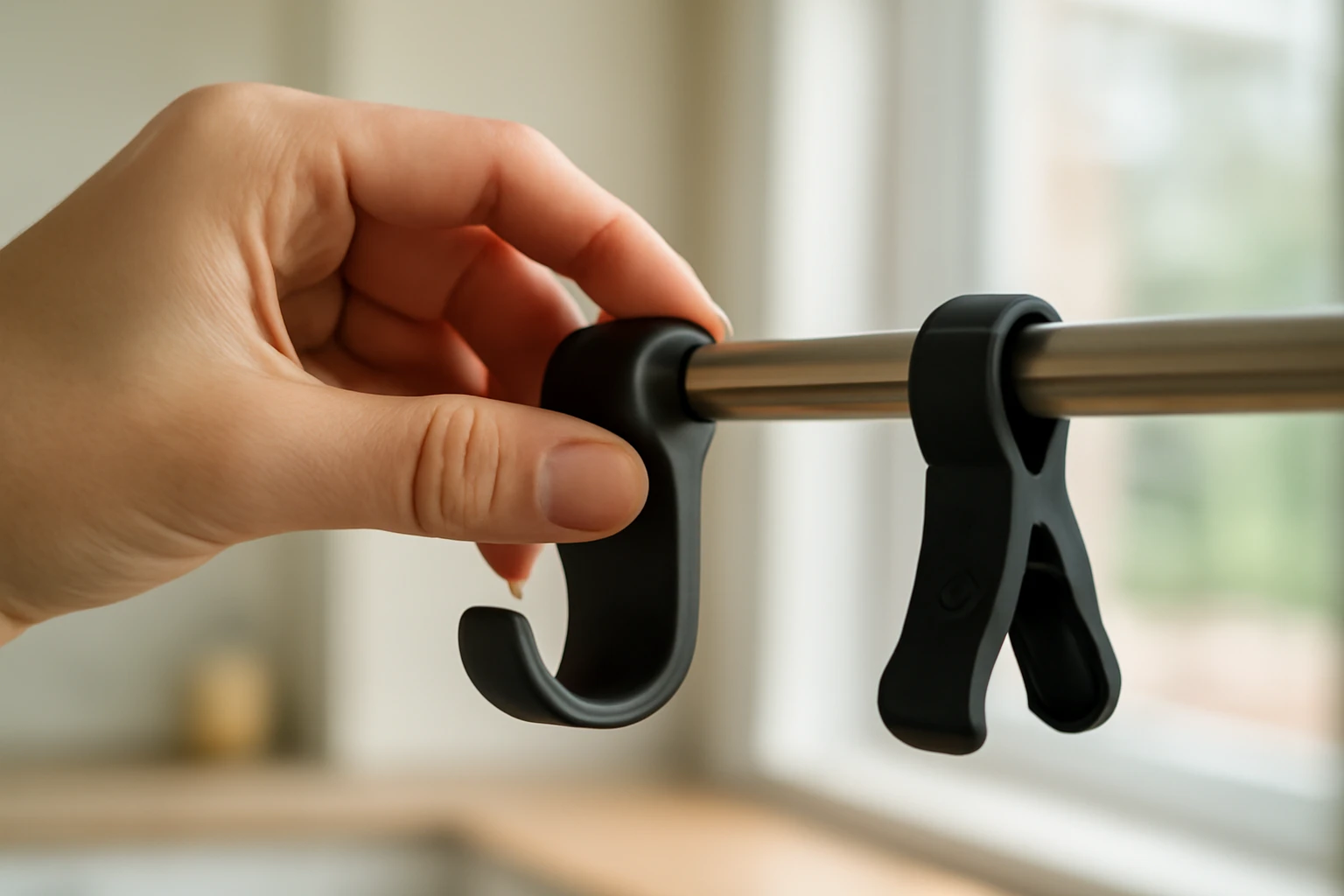
These hooks are useful for rental properties or metal-frame windows. They are not the best choice for very heavy curtains unless explicitly rated for that load.
Snap tape and hook tape systems
Curtain snap tape has small snaps or pockets sewn into the fabric edge. Hooks or carriers attach into the tape to join fabric to rings or gliders.
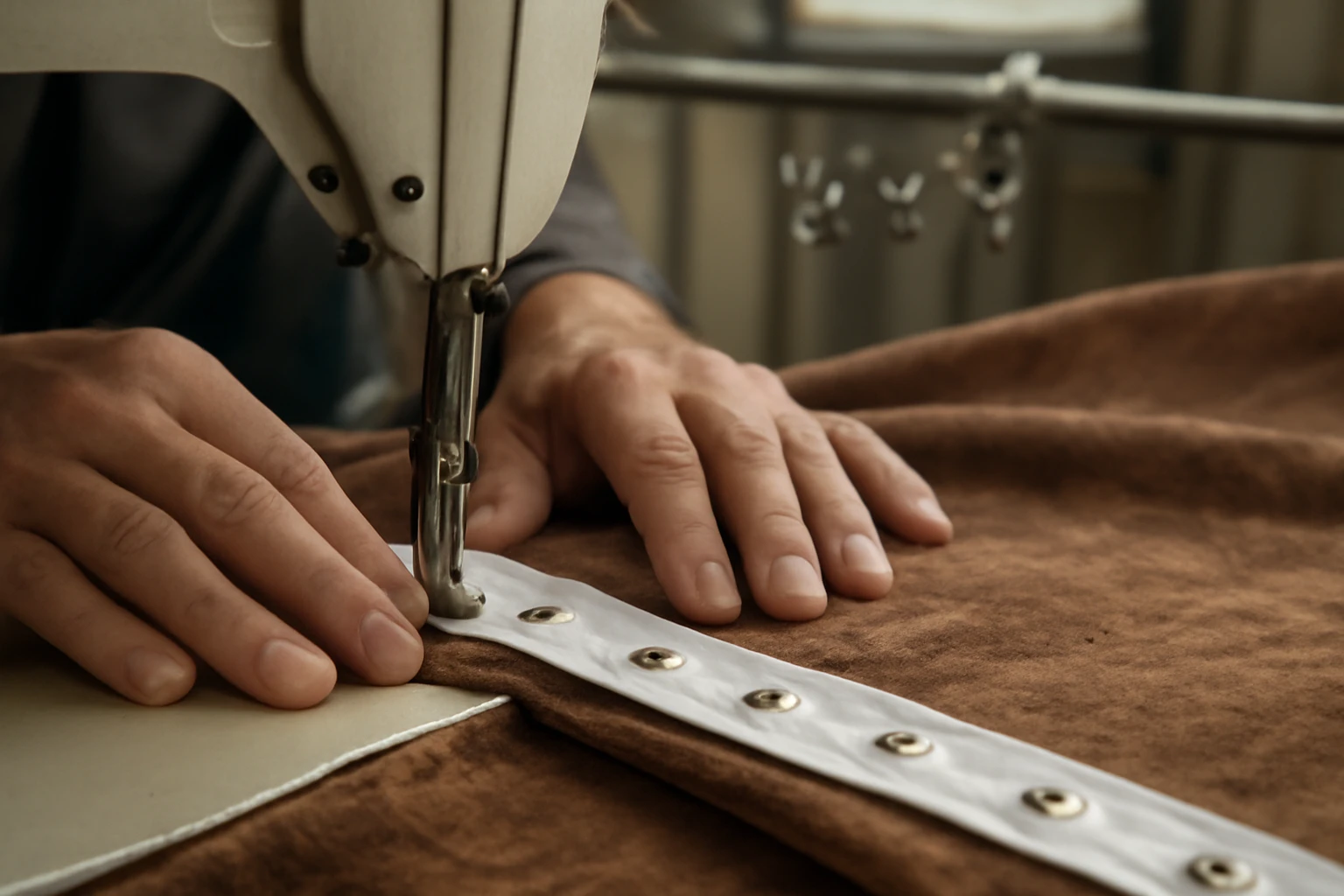
Snap tape adds flexibility and neatness. It is favored in trade installations because it offers easy removal for laundering and consistent spacing.
Comparison table: which hook suits your project
This table compares modern types of curtain hooks across common decision points: best use, fabric weight, ease of installation, and aesthetic.
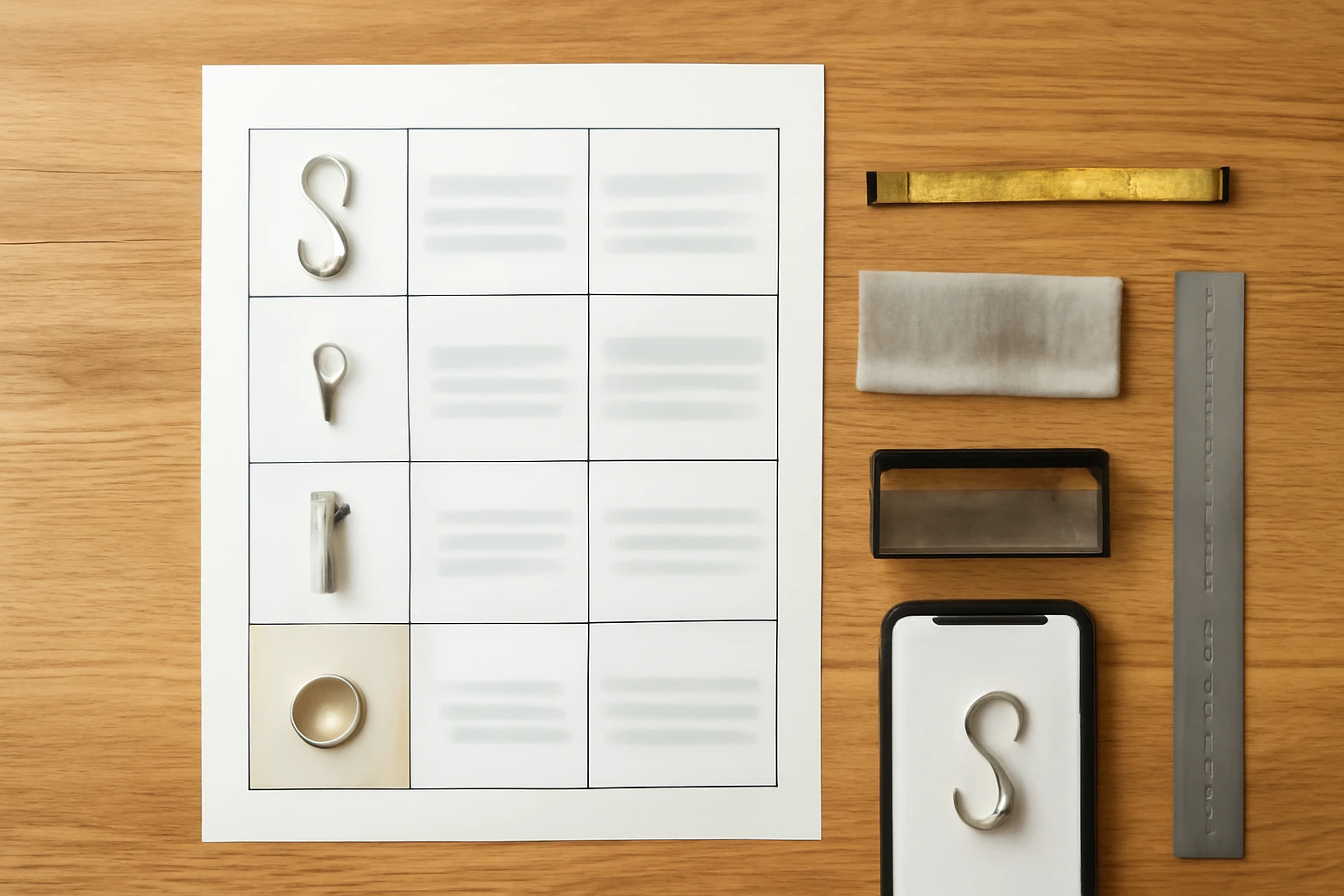
| Hook type | Best for | Fabric weight | Ease of install | Aesthetic |
|---|---|---|---|---|
| S-hooks | Casual curtains, quick swaps | Light to medium | Very easy | Informal |
| Ring clips | Sheers, café curtains | Light to medium | Very easy | Casual to modern |
| Pinch pleat hooks | Formal drapes | Medium to heavy | Moderate | Traditional to upscale |
| Eyelet/grommet | Modern panels | Light to medium | Easy | Clean, modern |
| Track gliders | Heavy drapes, large spans | Medium to heavy | Moderate | Technical, minimal |
| Wave hooks | Contemporary interiors | Light to medium | Moderate | Sleek continuous folds |
| Magnetic/clamp hooks | Rental, metal frames | Light to medium | Very easy | Functional |
| Snap/tape systems | Professional installs | Light to heavy | Moderate | Hidden fixings |
Materials, finishes, and strength
Material choice affects durability, look, and weight capacity. Common options include steel, brass, aluminum, and engineered plastics.
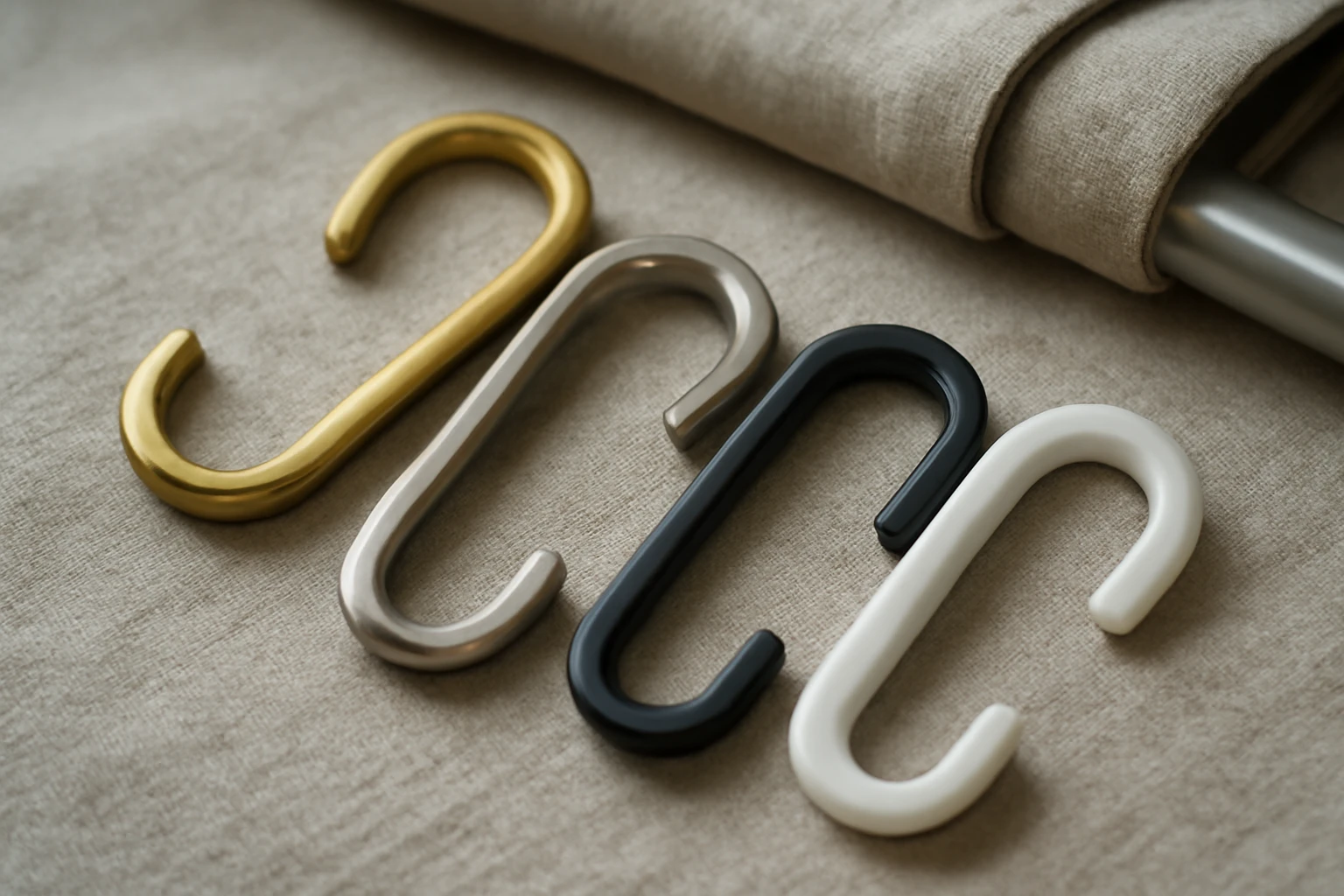
In our experience, metal hooks last longer and slide better on rods. Plastic gliders are quiet and cost-effective, but can wear sooner with heavy use.
Common materials and properties
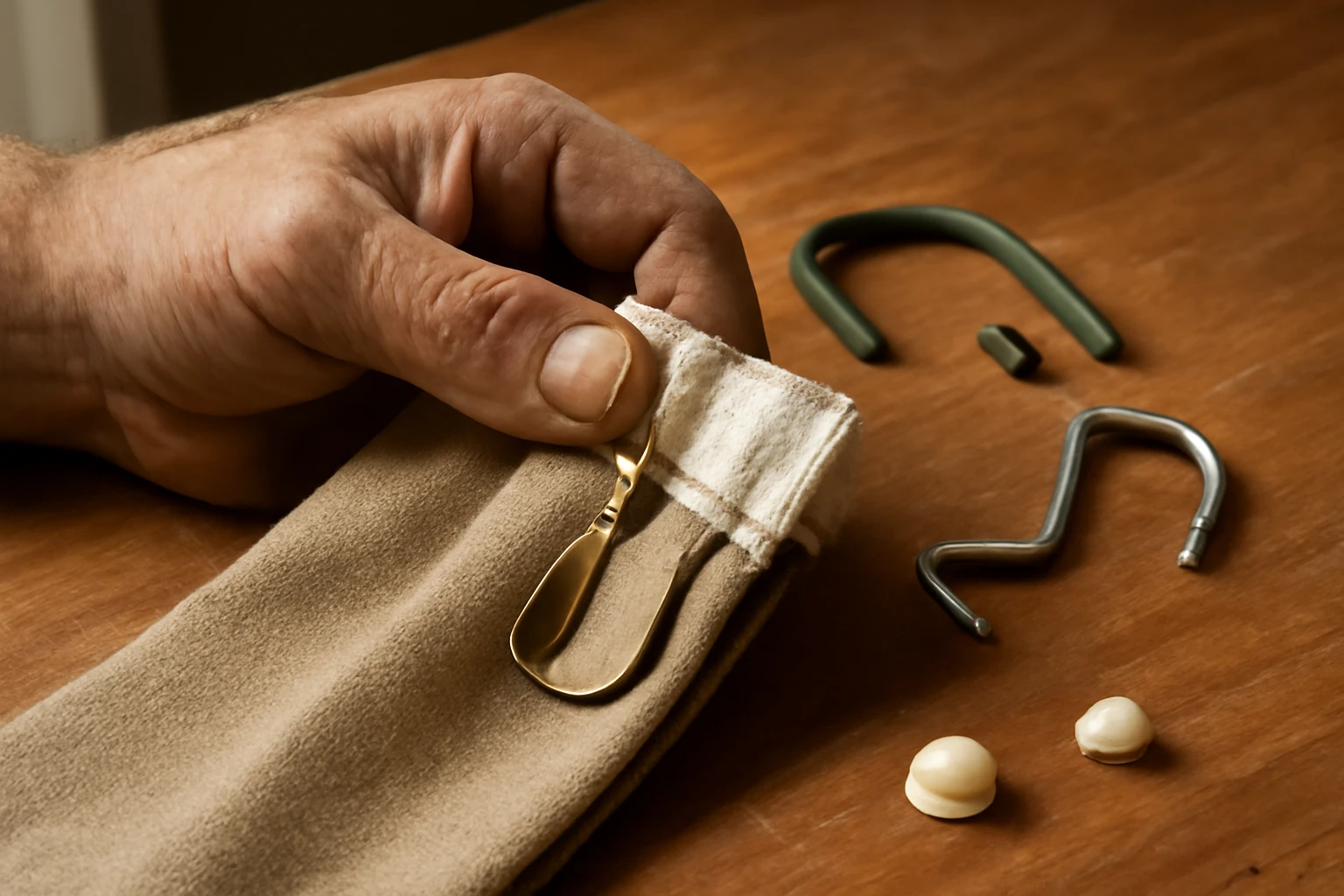
- Steel: high strength, good for heavy drapes, often powder coated.
- Brass: corrosion resistant, attractive finish, moderate to high strength.
- Aluminum: lightweight and corrosion resistant, less strong than steel.
- Nylon/plastic: quiet glide, low cost, suited to light curtains.
Coatings and finishes
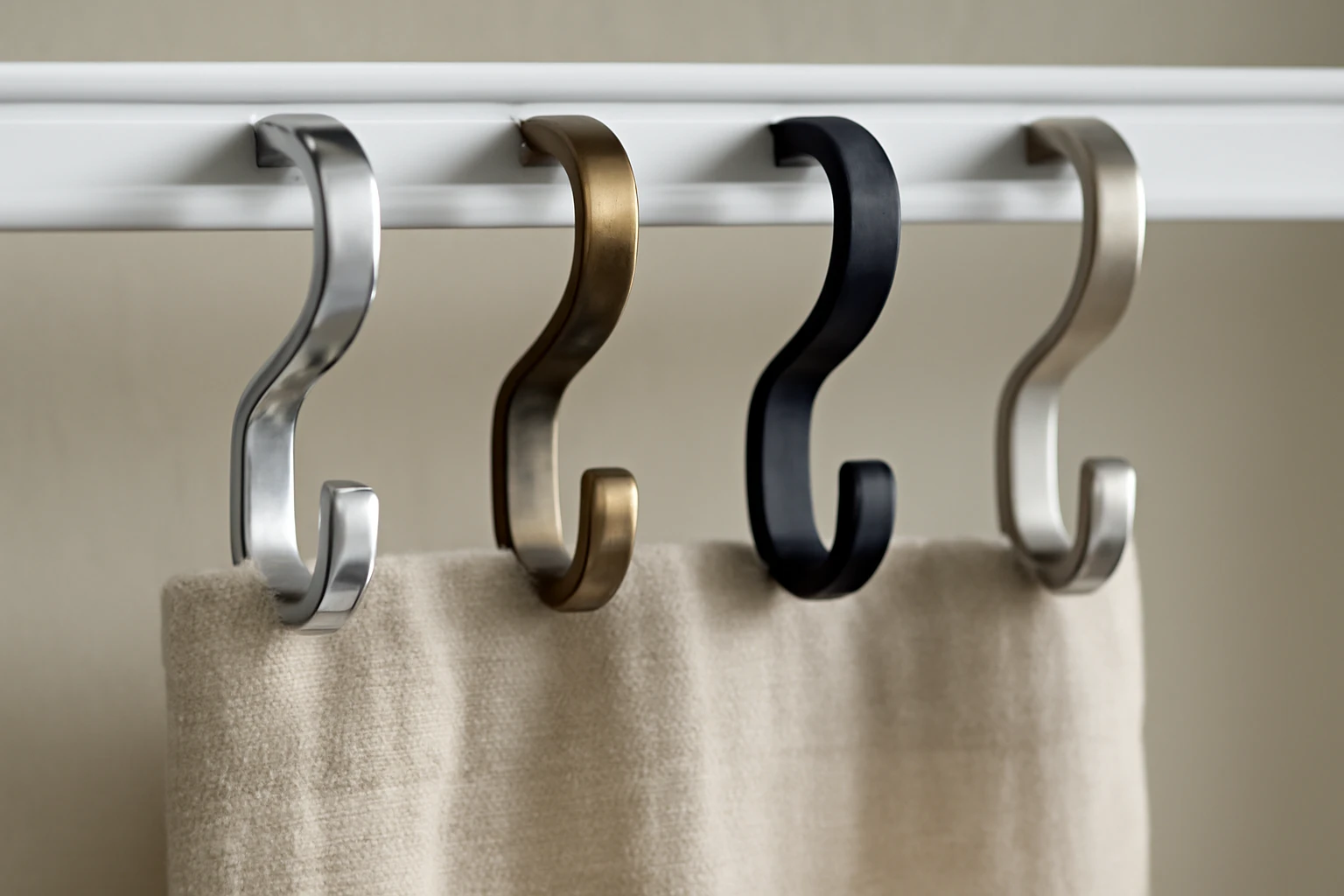
Finishes affect friction and appearance. Polished metal slides easily but can show fingerprints. Textured finishes like hammered or powder coat hide wear and fit casual interiors well.
Sizing, weight capacity, and rod compatibility
Choosing the right size hook and checking weight ratings prevents sagging and damage. Size includes hook gap, shank length, and head style.
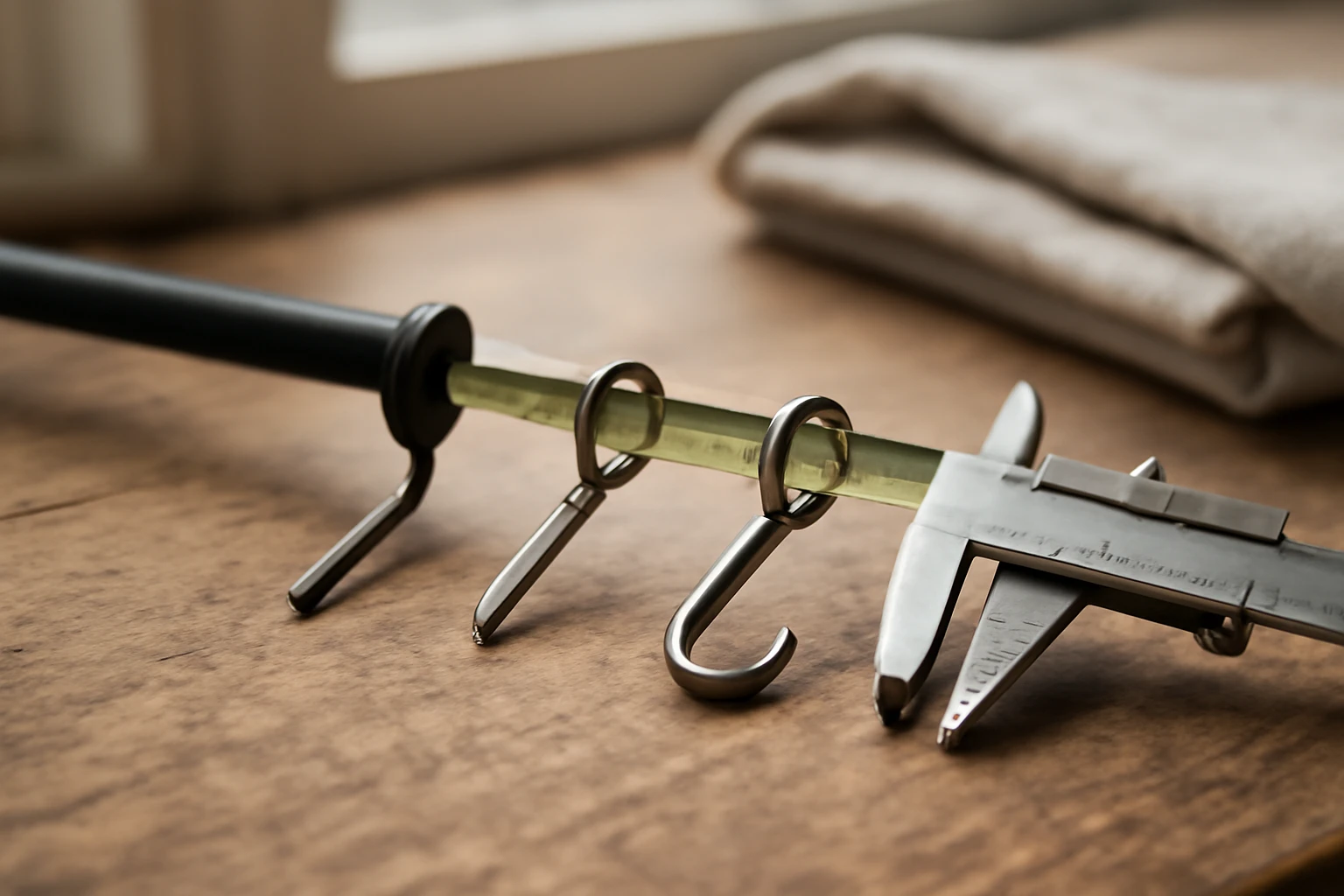
Table: typical sizes and weight guidance.
| Hook type | Typical size | Typical weight per hook | Notes |
|---|---|---|---|
| S-hooks | 20-40 mm gap | 2-6 kg | Use thicker gauge for heavy drapes |
| Ring clips | Ring 30-50 mm | 1-4 kg | Metal clips hold more than plastic |
| Pinch pleat hooks | 40-60 mm shank | 4-12 kg | Designed to distribute weight into header |
| Eyelet/grommet | Grommet 25-60 mm | Depends on rod | Fabric strength critical |
| Track gliders | Small glider 10-30 mm | 5-15 kg per carrier | Track rating more important |
A common error is counting hooks rather than checking the total load per rod or track. Add up curtain weight and include a safety margin of 20 percent.
Installation methods and tips
Installation varies by hook and hardware. Good technique speeds the job and prevents wear.
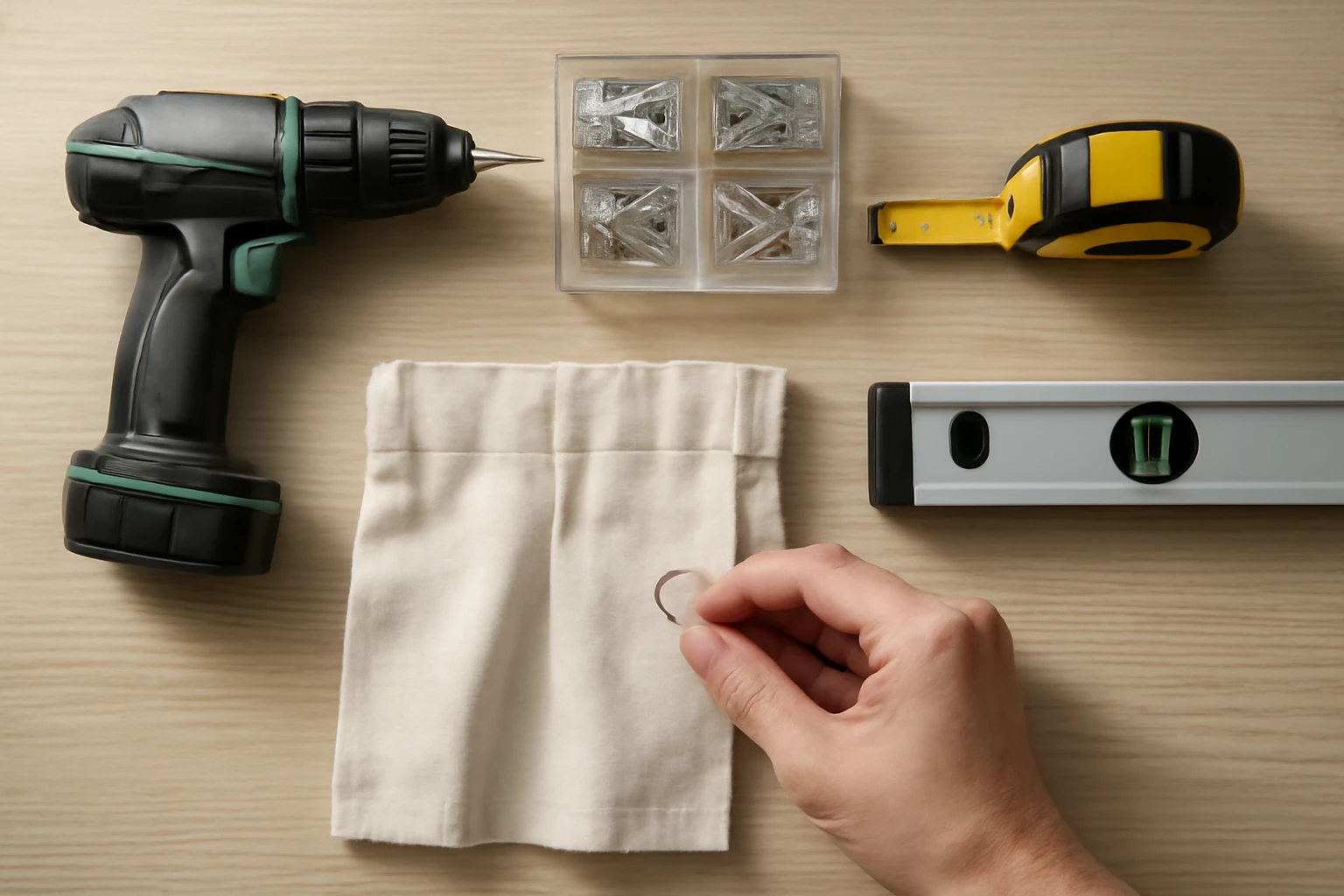
Always test a short section before hanging full panels. Check that hooks slide freely and that the curtain hangs level.
Installing hooks on curtain rods
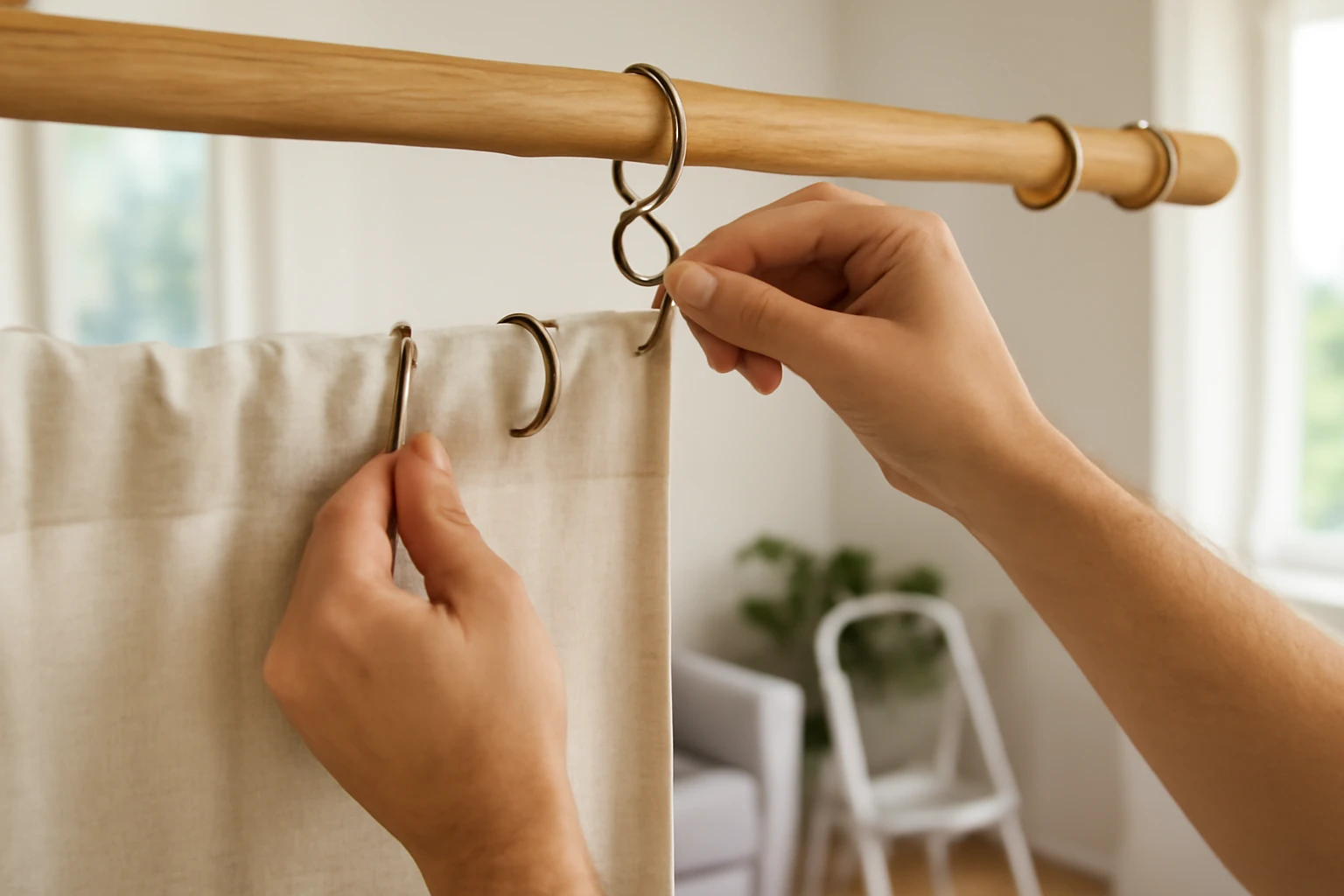
For rods, place rings or hooks evenly. Use end stops to keep rings from sliding off. For heavy curtains, support the rod with additional center brackets.
Installing hooks on tracks and gliders
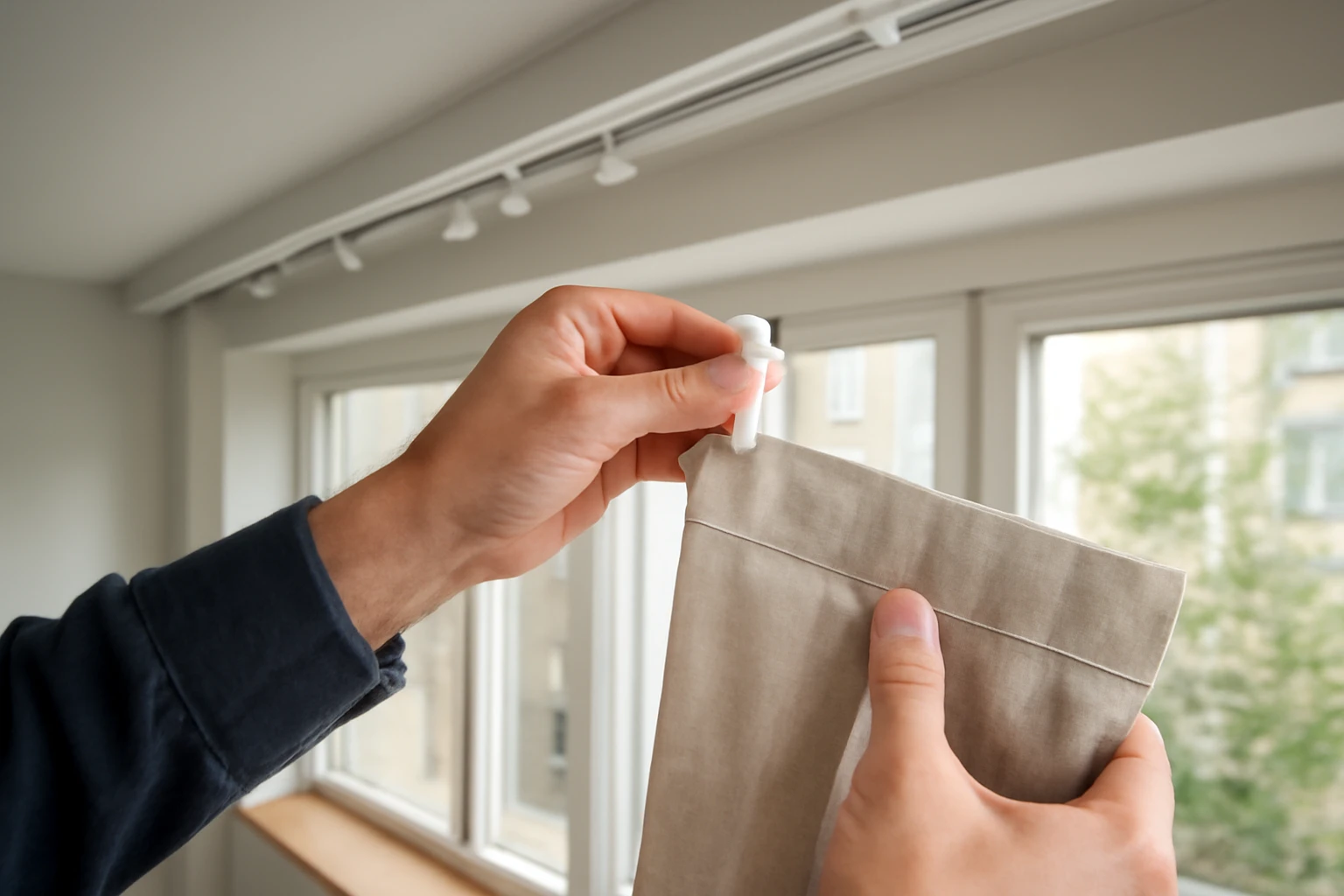
For tracks, ensure gliders are the correct type for the track width. Grease or replace worn gliders for smooth operation. Consider motorized retrofit if you want remote control.
Ceiling-mounted and recessed installations
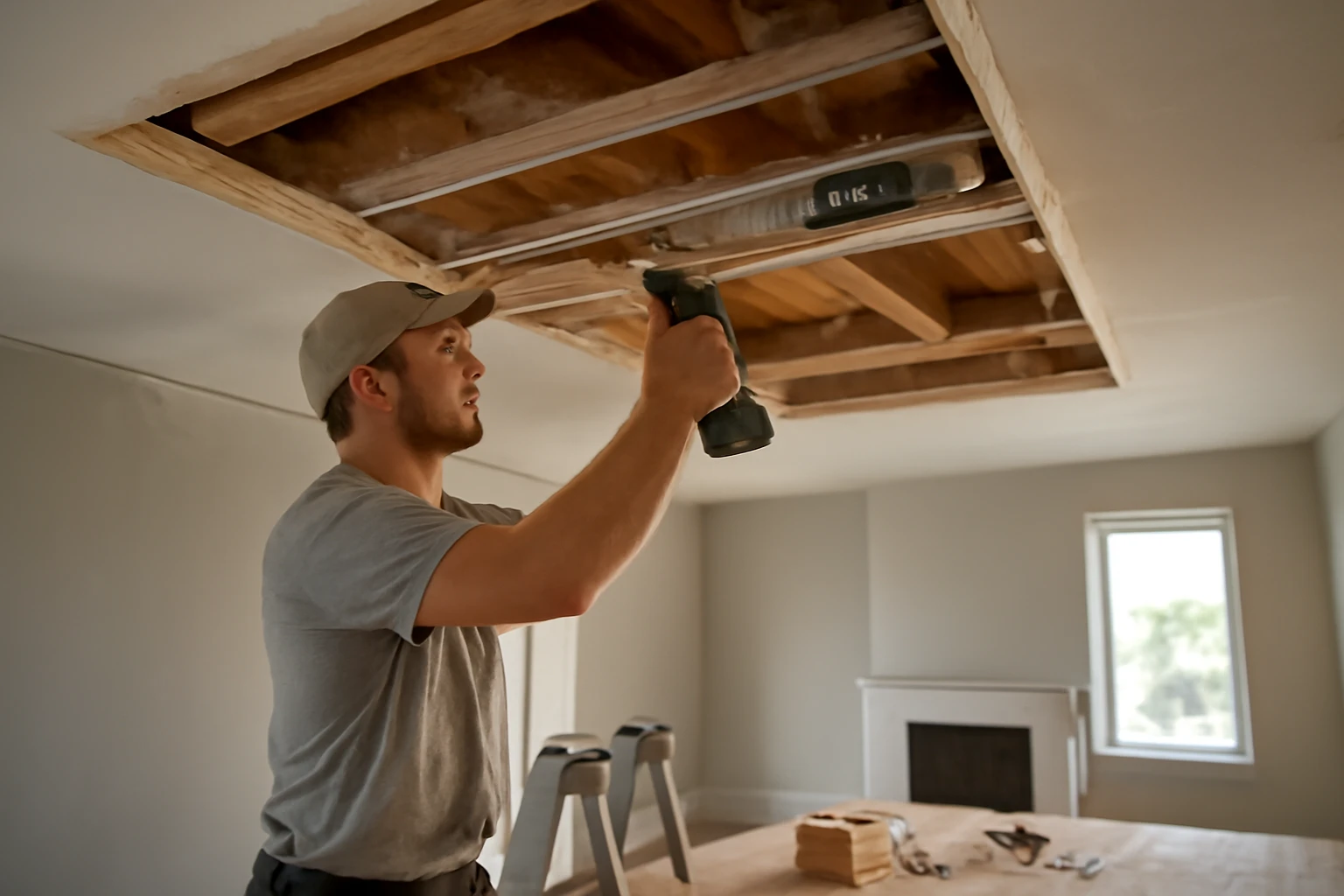
Ceiling mounts can hide hardware and are excellent for tall rooms. Take care to anchor into joists or use proper toggle bolts for plaster ceilings.
Choosing hooks by fabric and style
Match the hook to the fabric weight and the room style. The right pairing can improve curtain longevity and moveability.
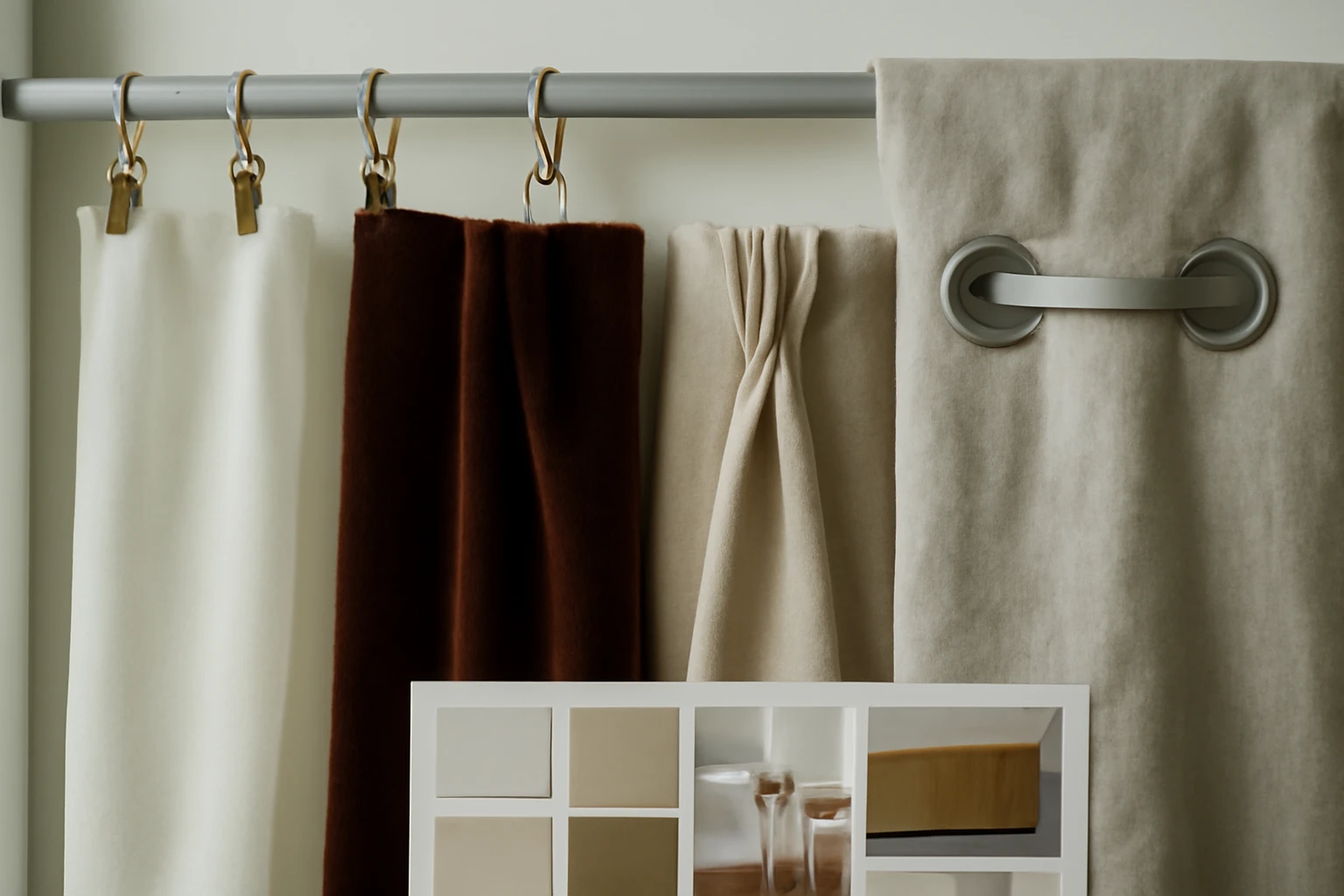
Light sheer fabrics glide well on rings and clips. Heavy velvet needs strong hooks or track gliders. Structured headings like pinch pleats suit formal rooms, while eyelets and wave hooks fit modern minimal layouts.
Care, maintenance, and troubleshooting
Proper care keeps hooks and tracks functioning for years. Routine checks prevent surprises.
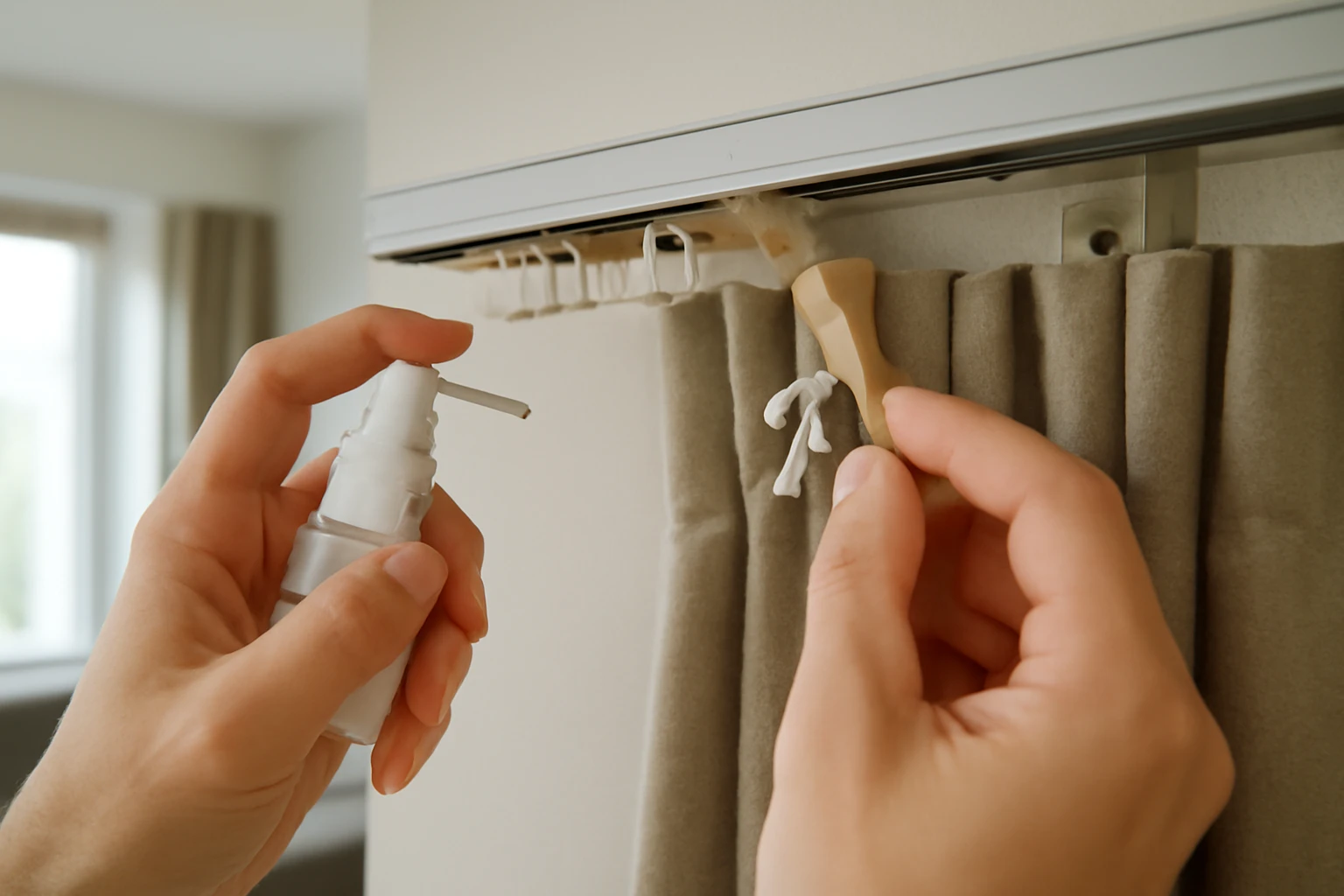
In our experience, cleaning the track and replacing worn gliders prevents most problems. Tighten brackets and replace bent hooks promptly.
Cleaning and corrosion prevention

- Wipe metal hooks with a damp cloth and dry immediately.
- Use mild metal polish on brass.
- Apply silicone lubricant inside tracks for smooth movement but do not over-lubricate.
Common problems and fixes
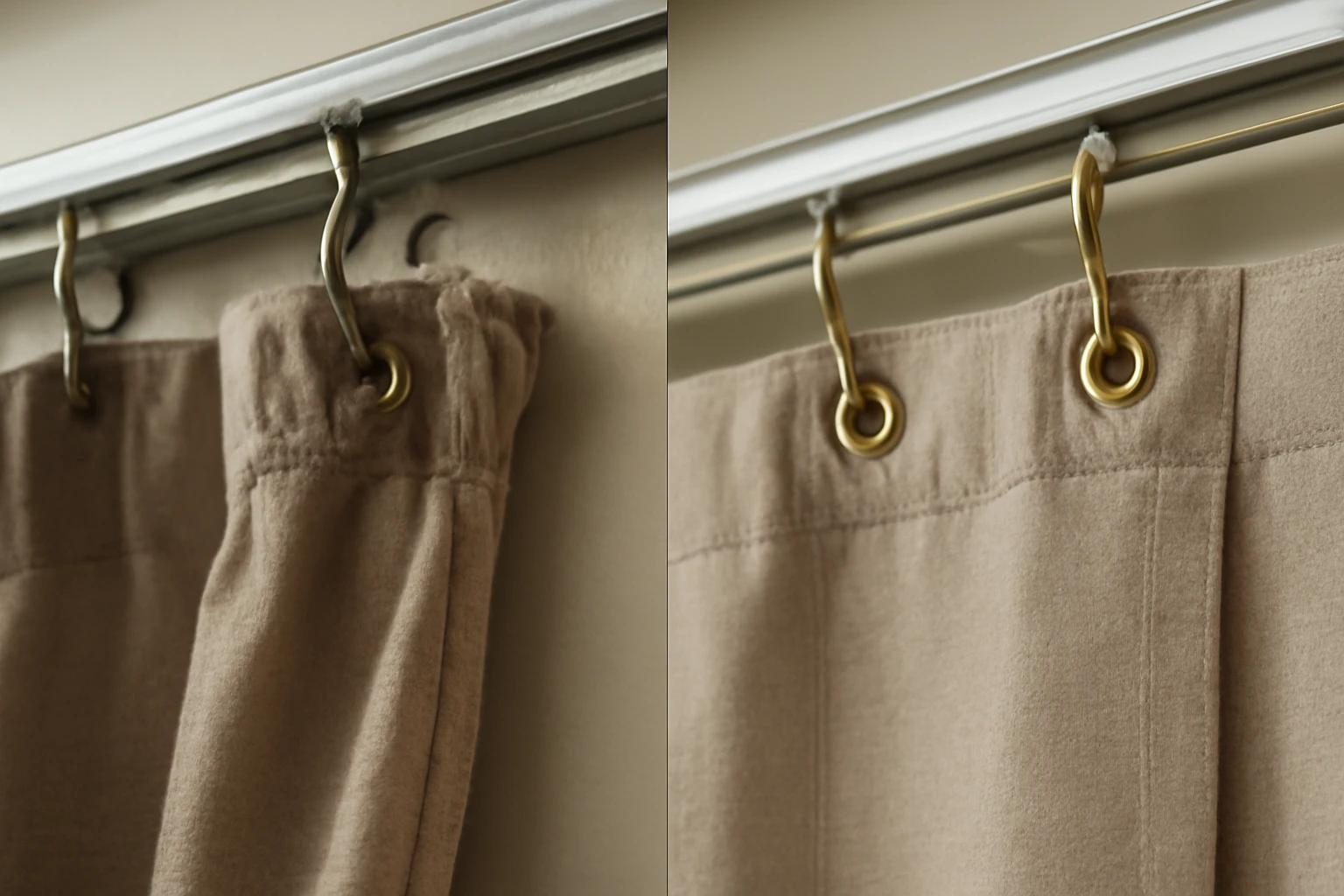
- Sagging: add center support or stronger hooks.
- Sticking: clean track and replace worn gliders.
- Ripping at eyelets: reinforce hem with patch or replace grommet.
Buying guide and price ranges
Prices vary by material, finish, and quantity. Professional-grade hooks and gliders cost more but last longer.
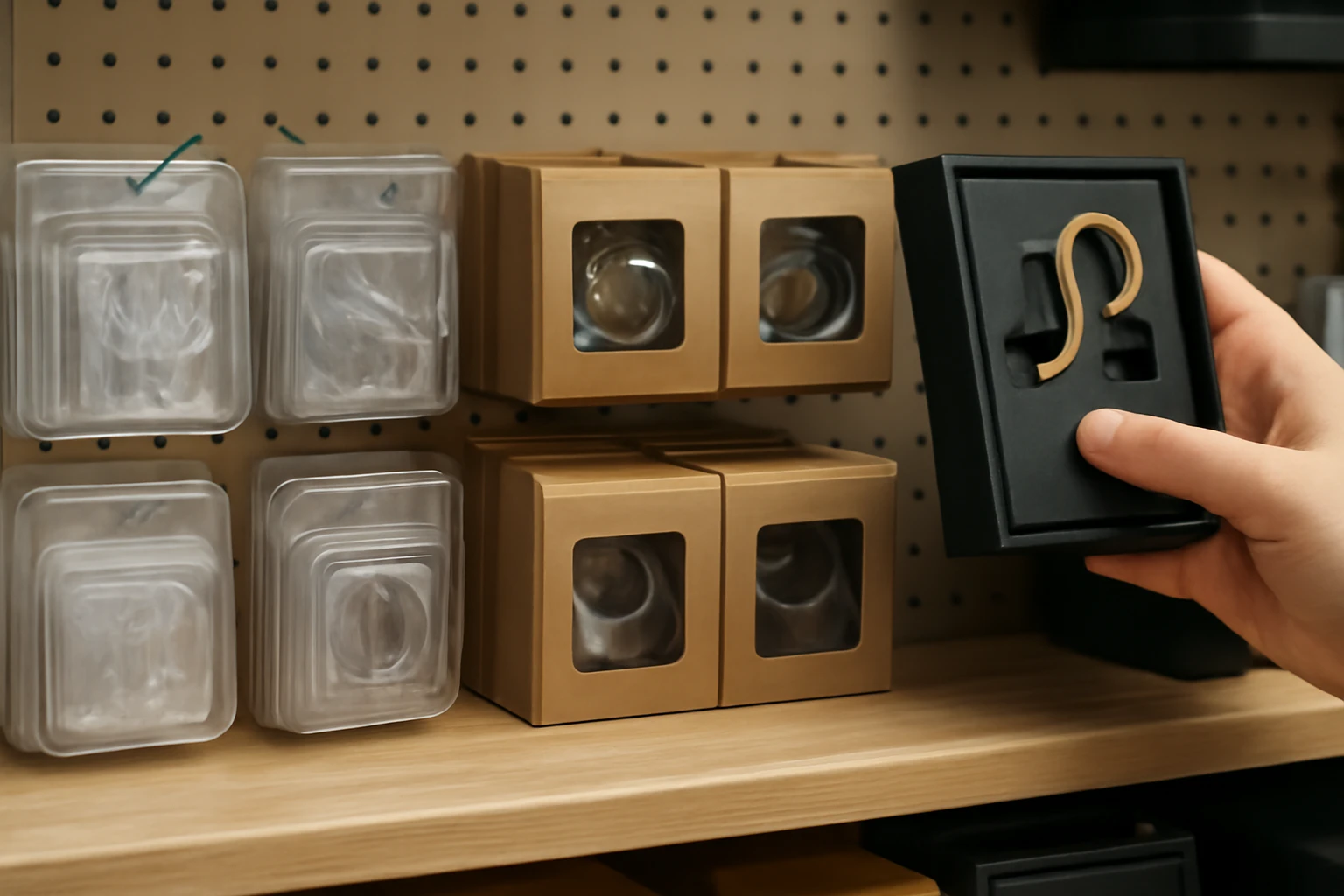
Table: typical price ranges (per set or per 10 hooks) in general retail markets.
| Product | Price range (USD) | Typical pack size |
|---|---|---|
| S-hooks | 5 to 15 | Pack of 10-20 |
| Ring clips | 8 to 30 | Pack 6-12 |
| Pinch pleat hooks | 10 to 40 | Pack 6-12 |
| Eyelet curtains (rod included) | 20 to 80 | Per panel |
| Track gliders and runners | 15 to 100 | Per track section or pack |
Buy from reputable suppliers and inspect load ratings. In our experience, spending a bit more on durable hooks reduces long-term replacement costs.
Real-world data, trends, and case studies
Modern interiors favor clean, hidden fixings and motorized tracks for large spans. Demand for matte black and satin brass finishes has grown in recent years.
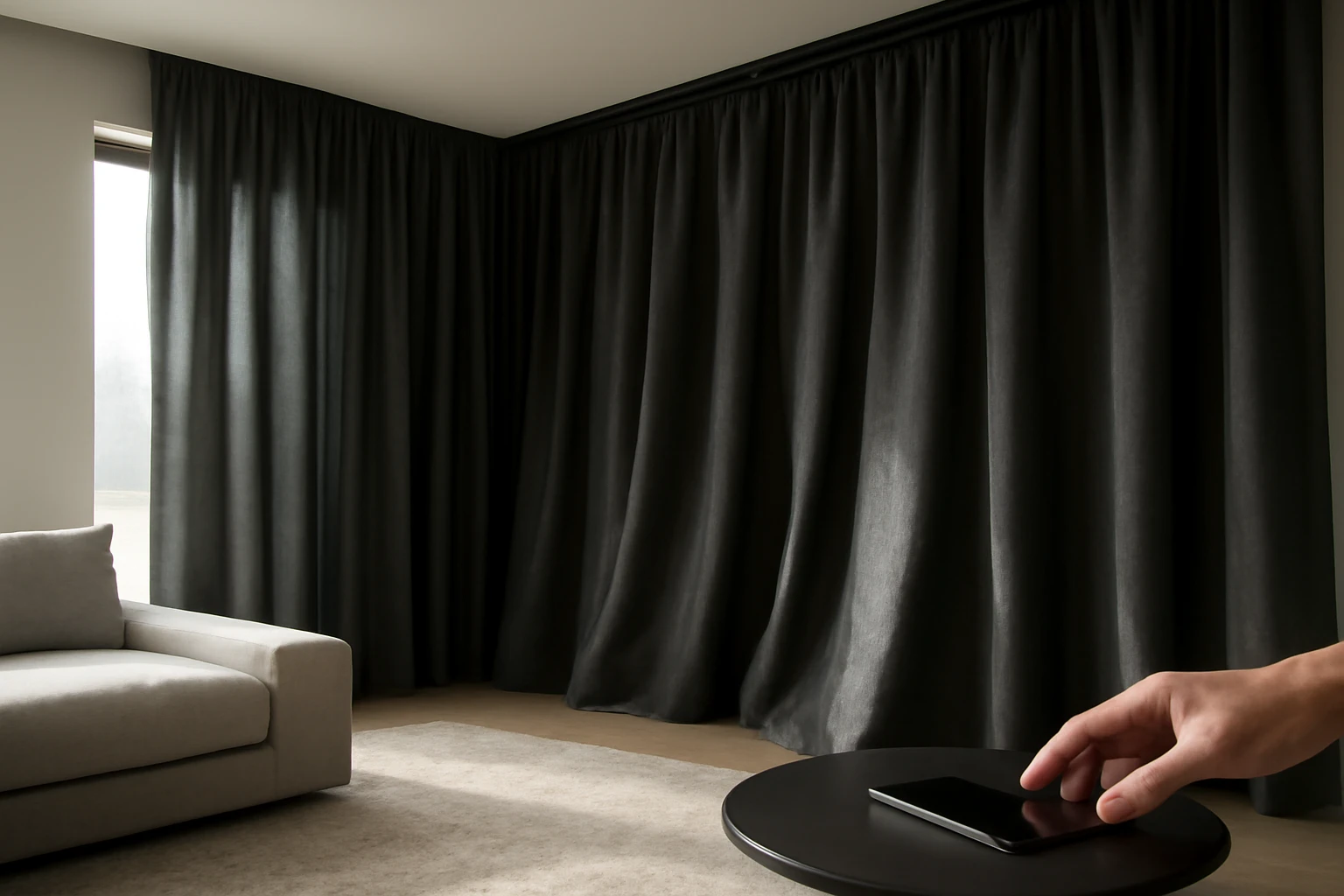
Case study summary: a small hotel replaced rings with track gliders across 40 rooms. Result: smoother operation, fewer complaints, lower maintenance costs over 18 months.
Quick data points:
- Hotels and commercial properties favor track systems for durability.
- DIY retail sees highest sales in ring clips and S-hooks for ease of use.
- Motorized gliders are a growing segment, up about 12 percent year over year in some markets.
Conclusion and practical checklist
Choosing modern types of curtain hooks requires balancing style, strength, and compatibility with your rod or track. Small decisions now save time later.
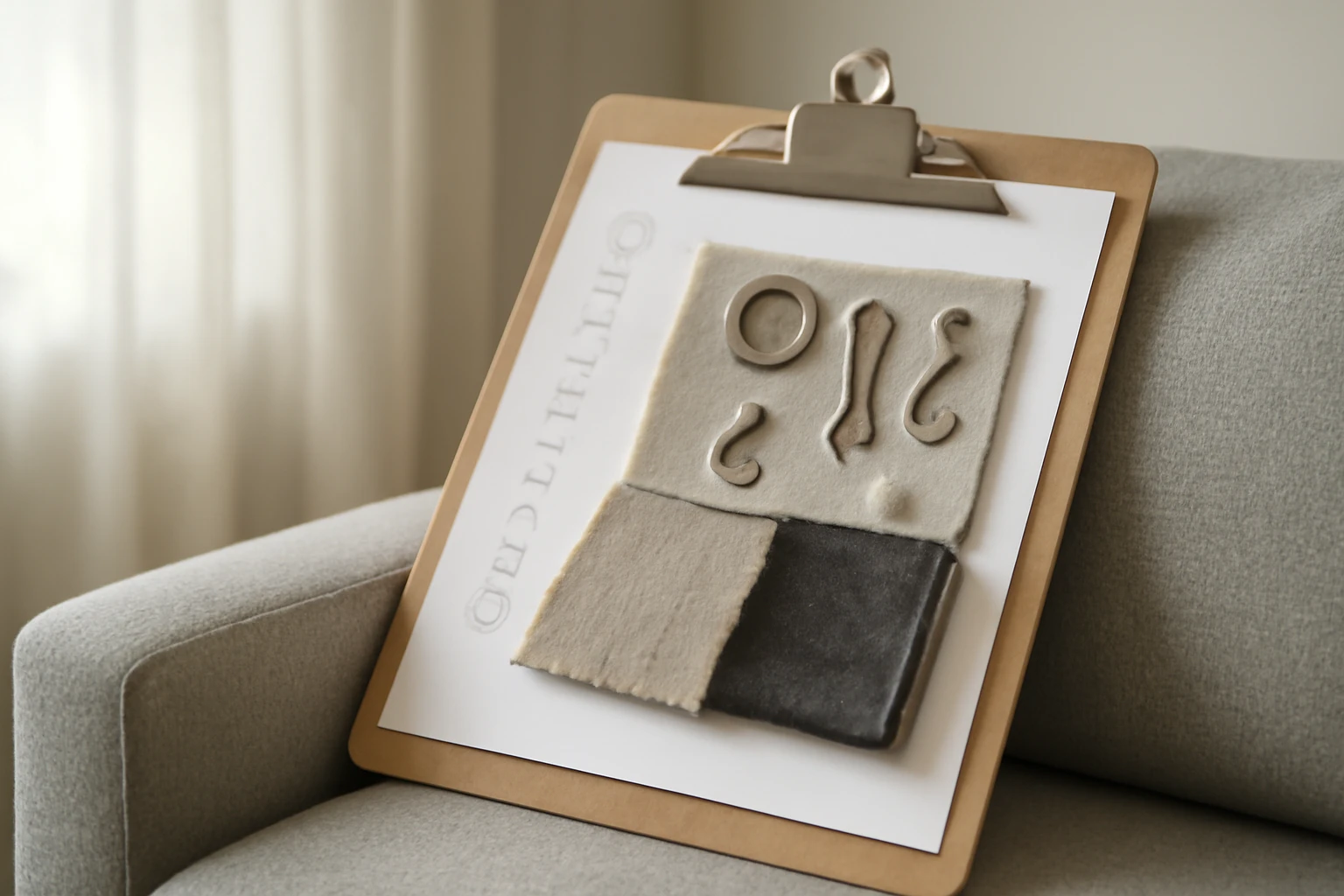
Practical checklist:
- Measure curtain weight and width.
- Confirm rod or track type and load rating.
- Choose material and finish to match decor.
- Test a sample hook before full installation.
- Maintain tracks and replace worn parts promptly.
In our experience, following these steps prevents most common problems and keeps curtains looking their best for years.
Frequently Asked Questions
What are the most durable modern curtain hooks?
Steel and solid brass hooks are the most durable choices. They resist bending and support heavier fabrics better than plastic. For large or heavy curtains, use metal pinch pleat hooks or track gliders rated for the total curtain weight.
Can I use S-hooks with heavy drapes?
You can use S-hooks for medium weight drapes if the hook gauge is heavy and the rod is well supported. For very heavy drapes, choose pinch pleat hooks or track gliders to distribute weight more evenly and reduce stress on individual hooks.
How do I choose hooks for different curtain fabrics?
Match hook strength to fabric weight: light fabrics work with ring clips or eyelets; medium fabrics suit S-hooks or wave systems; heavy fabrics require pinch pleat hooks or track gliders. Always reinforce fabric edges where hooks attach.
Are magnetic curtain hooks safe for rental apartments?
Magnetic hooks are a practical noninvasive option for metal frames. They are generally safe for lightweight curtains but check the magnetic pull rating and avoid heavy drapes unless the product is rated accordingly.
How often should I replace curtain gliders or hooks?
Inspect hardware annually for wear. Expect plastic gliders to last 2 to 5 years under heavy use; metal hooks and quality gliders can last much longer. Replace any pieces that bend, crack, or cause uneven movement.