Clean a leather jacket by first testing a small hidden area, spot cleaning with a mild leather cleaner or diluted soap, then gently wiping and finishing with a leather conditioner. For heavy stains or structural damage, seek a professional leather cleaner.
Key Statistics
- Professionals recommend cleaning and conditioning leather garments every 6 to 12 months depending on use.
- About 60% of common jacket stains are oil-based (body oils, food, grease). Spot cleaning solves most of these.
- Proper conditioning can extend leather life by an estimated 30 to 50 percent compared with neglected jackets.
Intro
A well cared for leather jacket can last decades. This guide covers safe home cleaning, targeted stain removal, conditioning, storage, and when to seek a pro. Read the quick steps first, then use the deeper sections for specific problems.
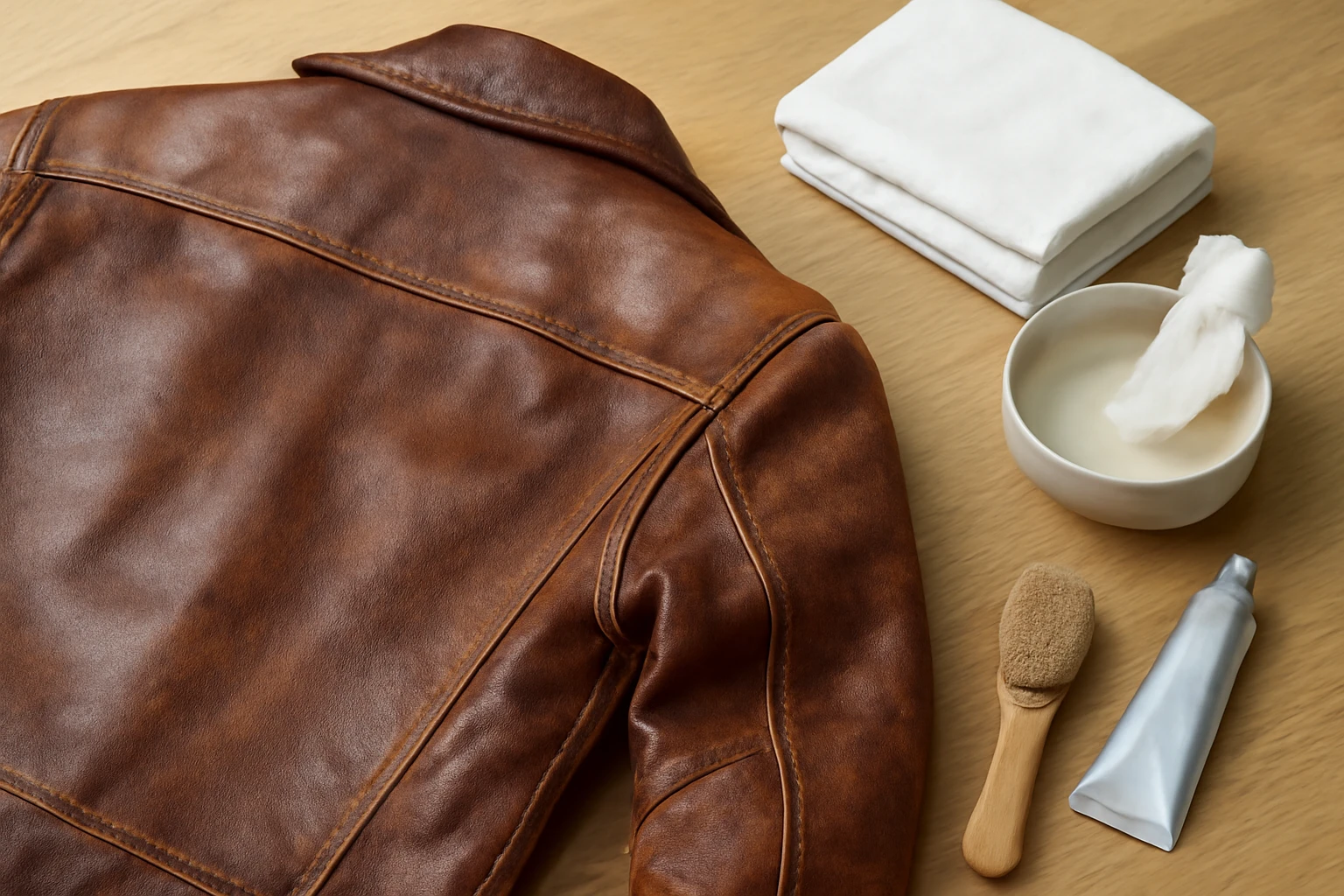
When to clean your leather jacket
Knowing when to clean matters more than cleaning too often. Light spot cleaning is fine as needed; full cleaning and conditioning should be less frequent.
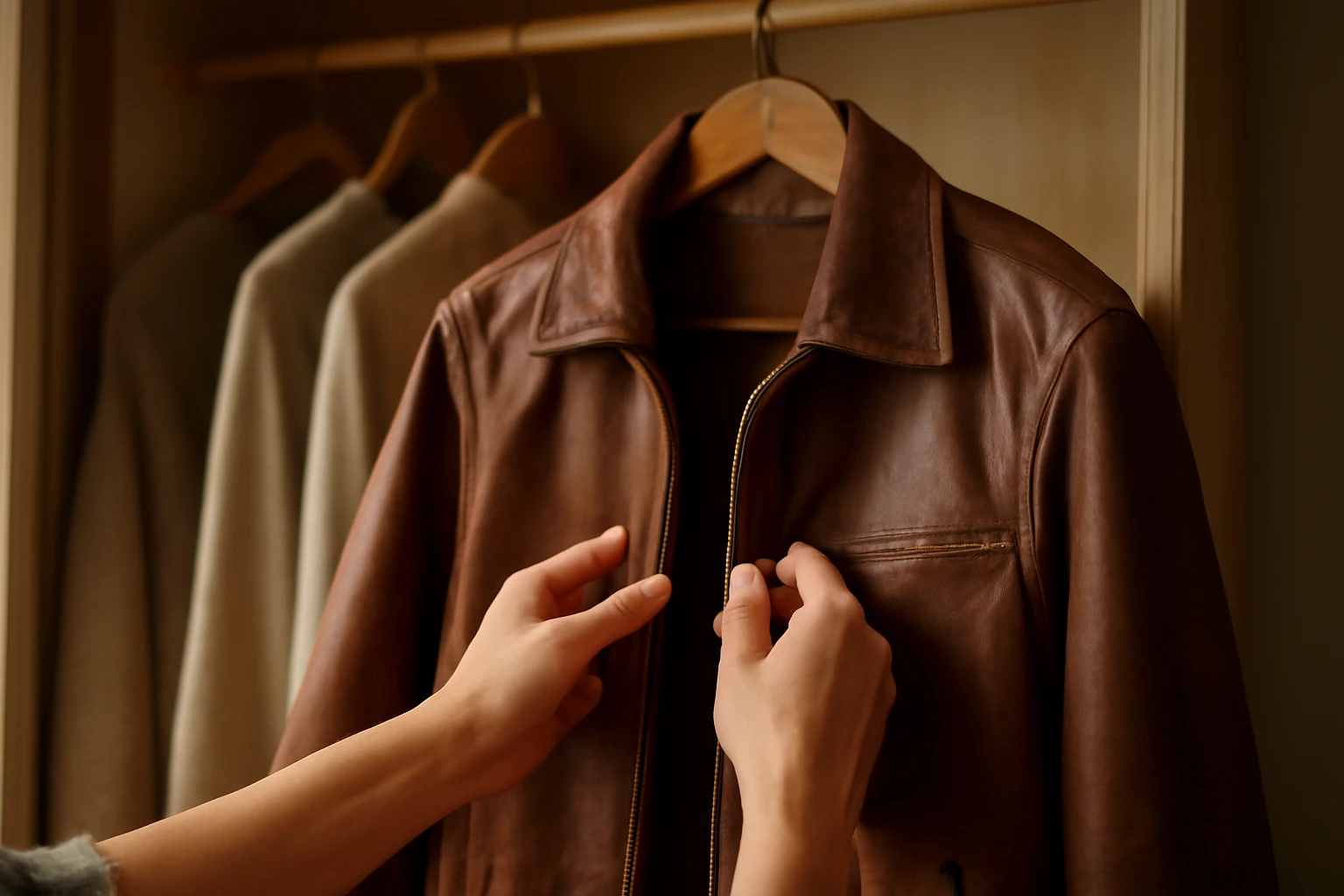
Signs it needs cleaning
- Visible stains, sticky spots, or dark spots.
- Dry, cracked or stiff areas.
- Noticeable odor from smoke, sweat, or prolonged storage.
- Heavy dust or surface film after daily wear.
Recommended frequency
- Spot clean as stains appear.
- Light clean and conditioning every 6 months for regular wear.
- Deep clean only when buildup or stains are present, or once a year for heavy use.
A common mistake is aggressive cleaning too often. In our experience, that removes natural oils and causes premature drying.
What you need: tools and materials
Prepare simple, safe items before you start. Use only products labeled for leather and test everything first.
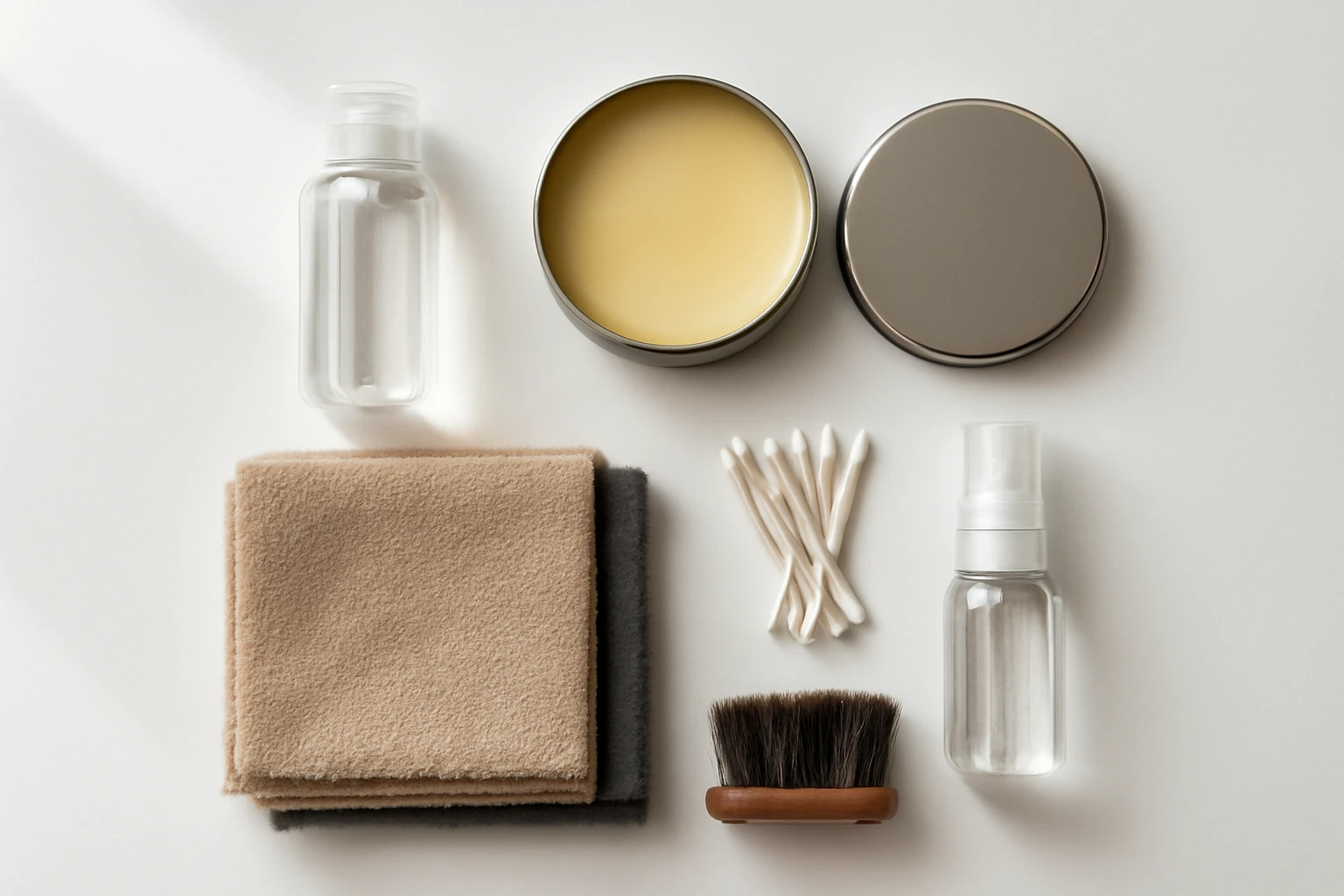
Essentials
- Soft microfiber or cotton cloths
- pH-balanced leather cleaner or mild saddle soap
- Leather conditioner (cream or oil designed for your leather type)
- Distilled water
- Soft brush for suede or textured grain
- Clean bowl for dilutions
Safe alternatives
- Mild dish soap diluted heavily (1 drop soap per 100 ml water) for sealed leather only.
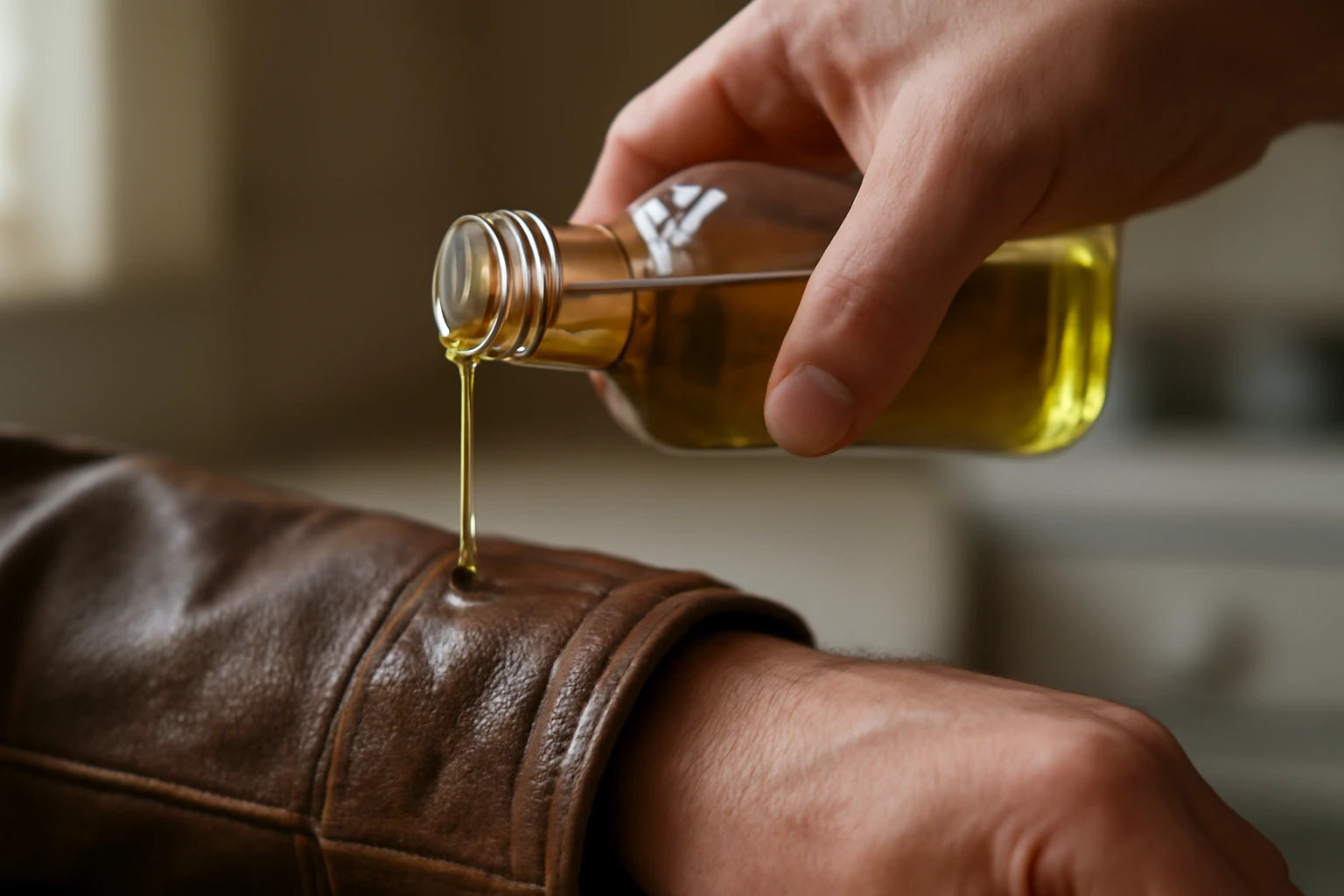
- Olive oil or household oils are not advised; they darken leather and attract dirt.
Product check table
| Product type | Use | When to avoid |
|---|---|---|
| pH-balanced leather cleaner | Regular and spot cleaning | Unlabeled or general household cleaners |
| Saddle soap | Cleaning and mild conditioning | Aniline or very soft unfinished leather |
| Leather conditioner (cream) | Restoring oils and flexibility | Oily or heavily stained items without cleaning first |
| Distilled water | Diluting cleaner, dampening cloth | Hard tap water that can leave mineral marks |
Step-by-step cleaning guide
Follow these steps for most sealed leather jackets. Take time and work gently.
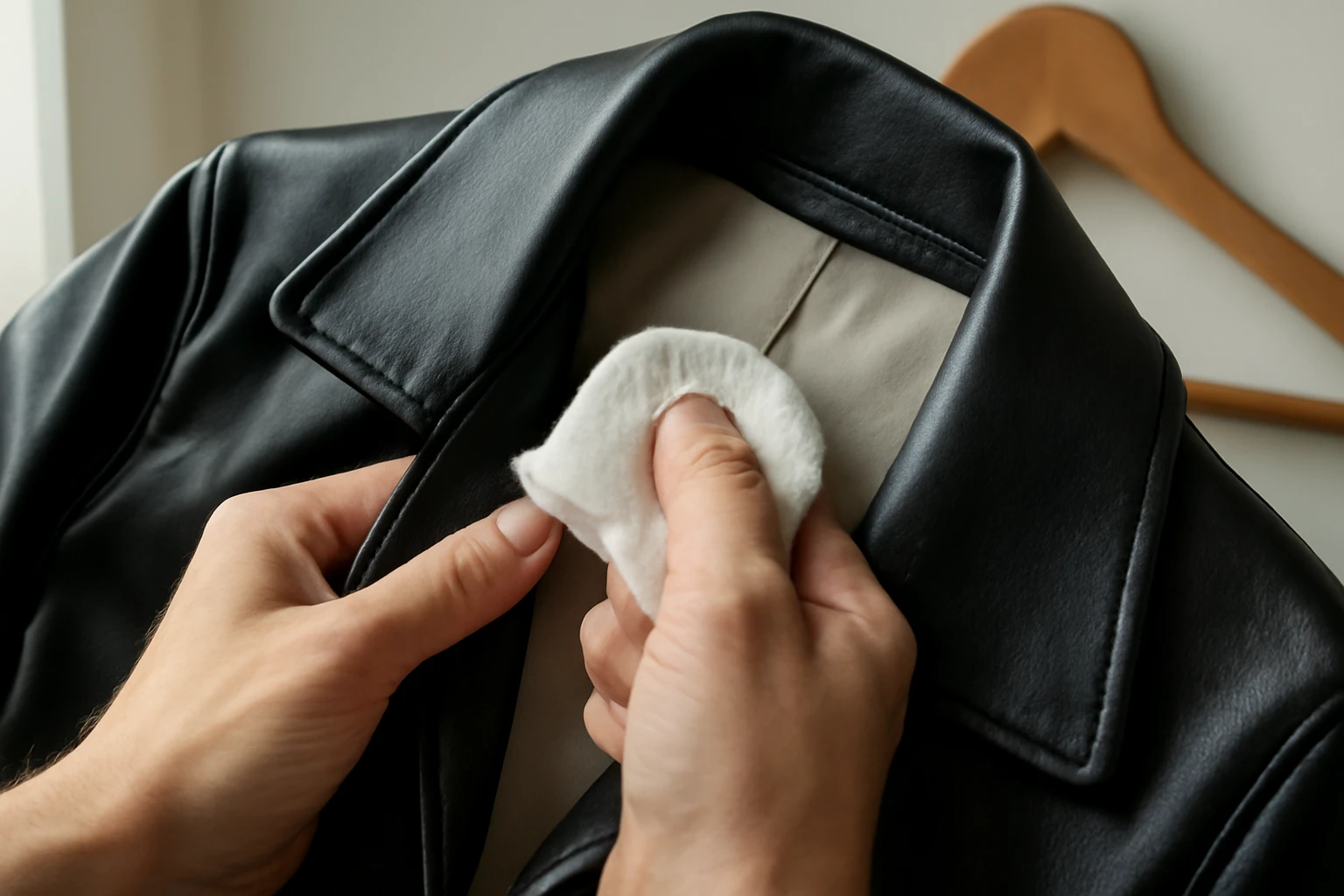
- Test first
Pick a hidden spot such as inside hem or under collar. Apply a small amount of diluted cleaner and blot. Wait 10 minutes to check for color change or finish damage.
- Dust and brush
Remove surface dust with a soft brush or dry cloth. This reduces dirt that would smear during wet cleaning.
- Spot clean
Dampen a cloth with diluted leather cleaner. Wring it well. Blot stains gently. Use tiny circular motions; do not scrub hard.
- Wipe away residue
Use a second damp cloth with plain distilled water to remove cleaner residue. Follow with a dry cloth to lift moisture.
- Condition while slightly damp
After cleaning, allow the jacket to air dry until only slightly damp. Apply a thin layer of conditioner using a lint-free cloth. Work into the leather in small circles.
- Buff and shape
After the conditioner absorbs (usually 15 to 60 minutes depending on product), buff with a soft cloth for a natural sheen. Hang the jacket on a broad-shoulder hanger to rest for 24 hours.
Timing and patience matter. Rushing to dry with heat will cause cracks.
Stain removal by type
Different stains need different approaches. Start mild and increase strength only if needed.
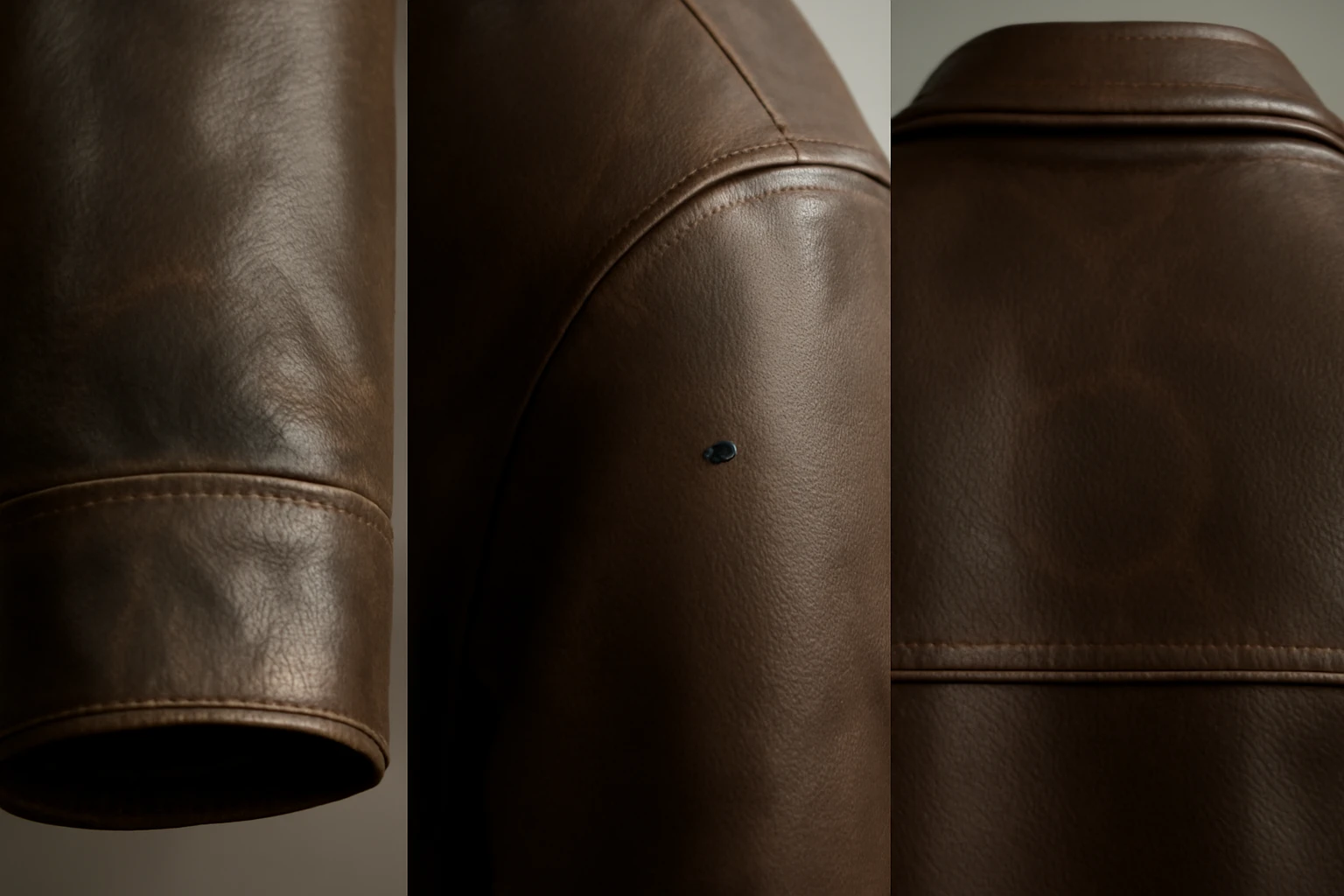
Oil and grease
- Blot excess with a paper towel. Do not rub.
- Sprinkle a small amount of cornstarch or talc to absorb oil. Leave overnight, brush off.
- If still visible, use a leather cleaner designed for oil stains and follow with conditioning.
Ink
- Fresh ink: Blot with a dry cloth. Avoid water which spreads ink.
- For set ink: Use a specialized leather ink remover or rubbing alcohol sparingly on an inside seam test area, then condition.
Water rings and salt stains
- Mix equal parts distilled water and white vinegar, dampen a cloth and gently wipe the affected area. Vinegar helps dissolve mineral salts.
- Dry naturally and then condition.
Mold or mildew
- Brush outside to remove spores. Wipe with a 10:1 mix of water and isopropyl alcohol, then let dry fully in fresh air. Condition after drying.
Blood or protein stains
- Use cold distilled water only. Blot, do not rub. If persistent, consult a professional.
When to stop and call a pro
If stain removal risks color loss, finish damage, or if the jacket is expensive or irreplaceable, professional leather cleaning is the safer choice.
Deep cleaning and conditioning
Deep cleaning is for jackets with surface buildup or very dry leather. Conditioning restores oils and flexibility.
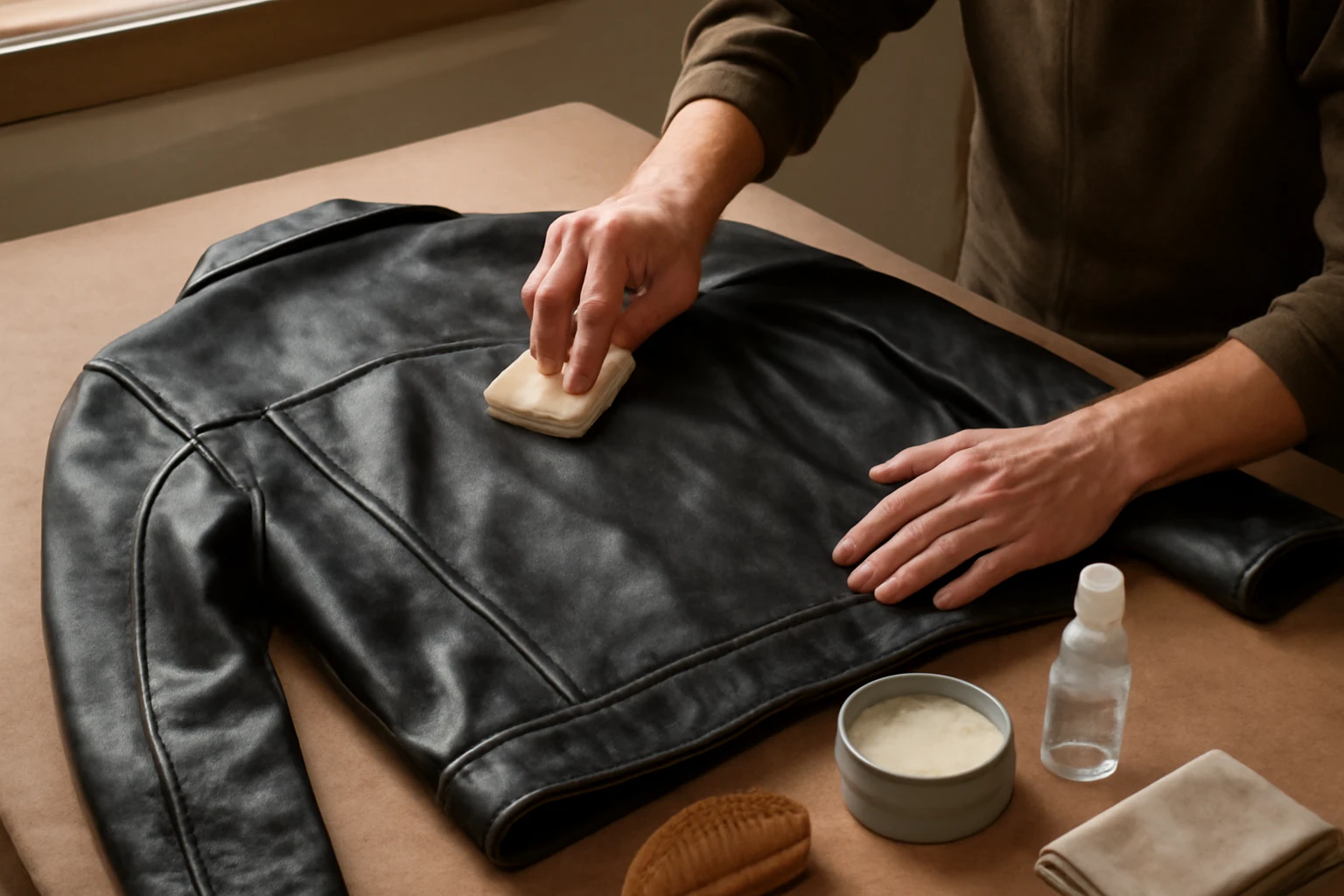
Deep clean steps
- Use a leather-specific deep cleaner following label instructions.
- Apply with a soft sponge or cloth, working in small sections.
- Remove all cleaner residues fully.
Conditioning tips
- Use a small amount. Too much conditioner leaves a sticky film.
- Rub in gently with steady pressure. Let it absorb for 30 to 60 minutes.
- Buff to restore natural luster.
Conditioner selection table
| Leather type | Recommended conditioner | Notes |
|---|---|---|
| Aniline leather | Light aniline-specific cream | Avoid heavy waxes that alter color |
| Semi-aniline / pigmented | Leather cream or lotion | Good protection and sheen |
| Nubuck / suede | Suede-specific sprays and brushes | Do not use cream conditioners |
Safety note: Always avoid household oils and universal cleaners. They often darken or break down leather finishes.
Drying, storage and wrinkle removal
Proper drying and storage preserve shape and prevent cracks.
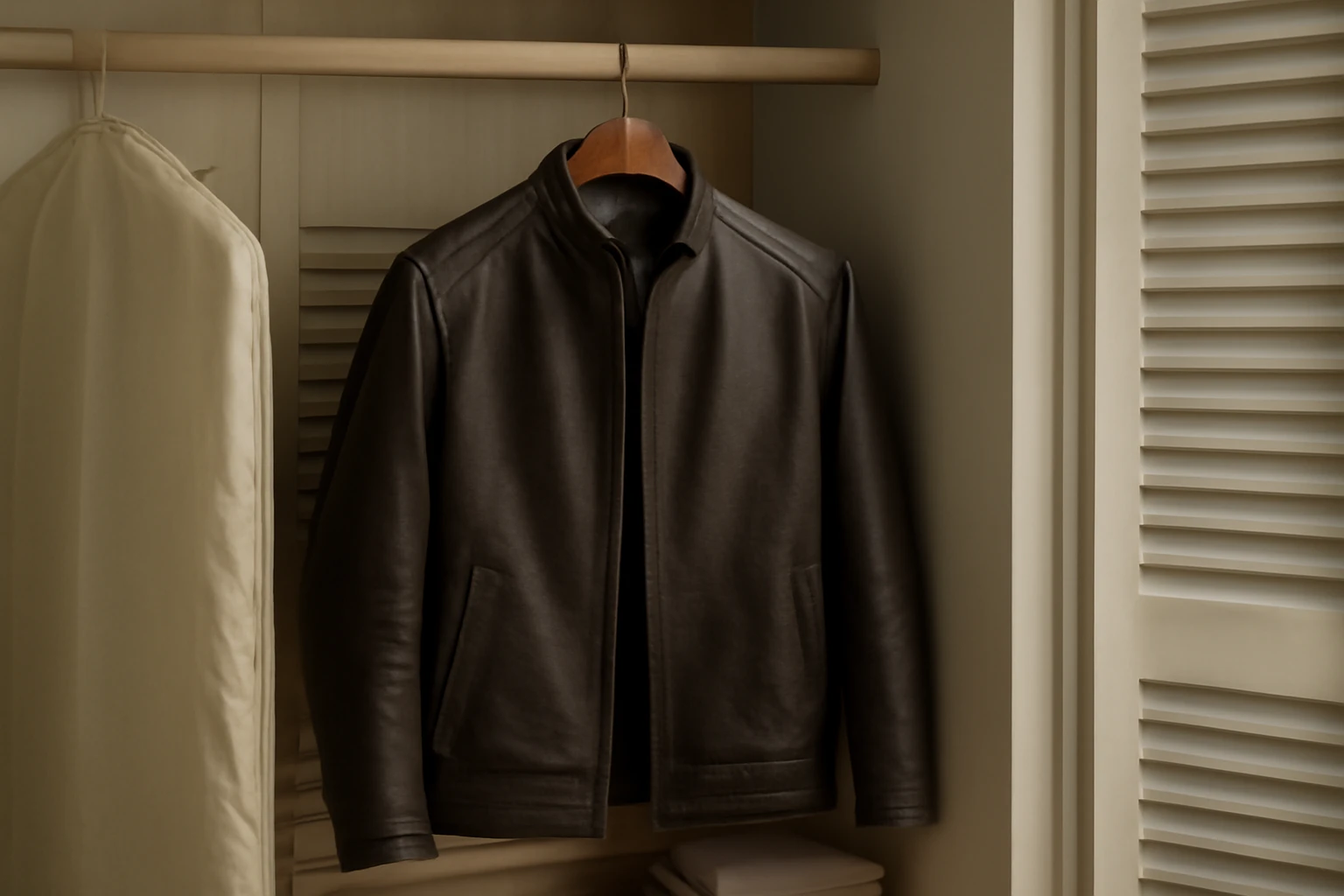
Drying
- Air dry at room temperature away from direct heat and sunlight.
- Stuff sleeves lightly with acid-free tissue to keep shape if drying for long periods.
Storage
- Use wide, padded hangers to support shoulders.
- Store in a cool, dry area with good air flow. Avoid plastic bags; use breathable cloth covers.
- For long-term storage, recondition before storing and check every 6 months.
Wrinkle removal
- Hang in a steamy bathroom for 10 to 20 minutes; then smooth gently with hands.
- Do not iron directly. If needed, use a low-heat steam iron held at least 20 cm away while smoothing with a cloth between iron and leather.
When to seek professional cleaning
Some jobs need a pro. High-value jackets, complex dyes, or structural damage are best handled by specialists.
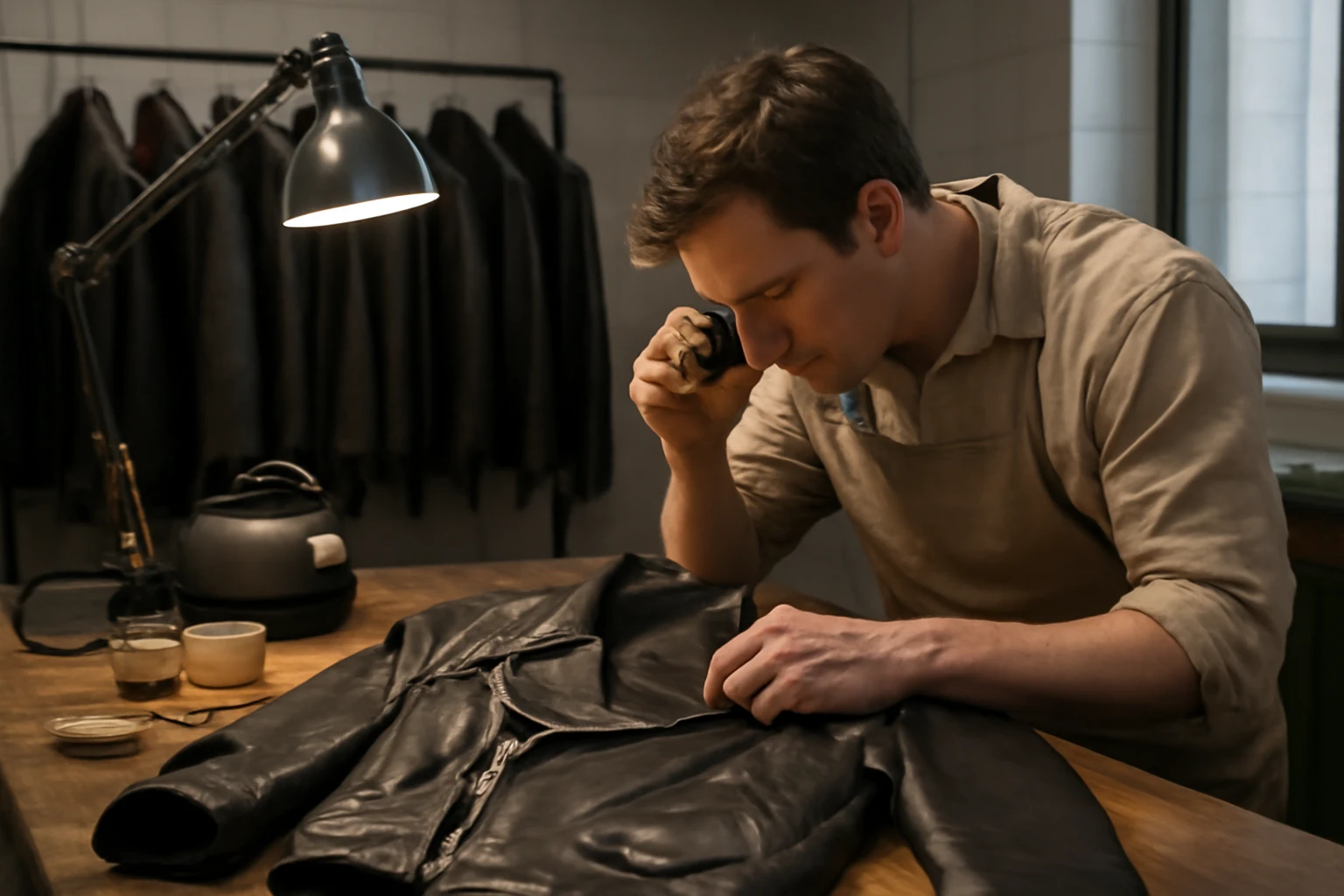
Signs to call a pro
- Large ink stains or dye transfer.
- Tears, rips, or broken lining.
- Severe odor deeply embedded in padding.
- Leather that is very dry, cracked, or has finish loss.
Cost considerations
- Basic professional cleaning ranges widely depending on region and leather type. Expect to pay more for specialist repairs.
- For heirloom or designer jackets, professional care is cost-effective compared with replacement.
Common mistakes to avoid
Small errors cause lasting damage. Keep these pitfalls in mind.
What not to do
- Do not use household detergents, bleach, or abrasive cleaners.
- Skip the dryer or direct heat sources.
- Avoid over-conditioning; excess product attracts dirt.
- Never use water on suede or nubuck; it stains.
A common error is treating every leather the same. Ask: is the leather finished, aniline, nubuck, or suede? Treatment differs.
Care schedule and comparison of cleaning methods
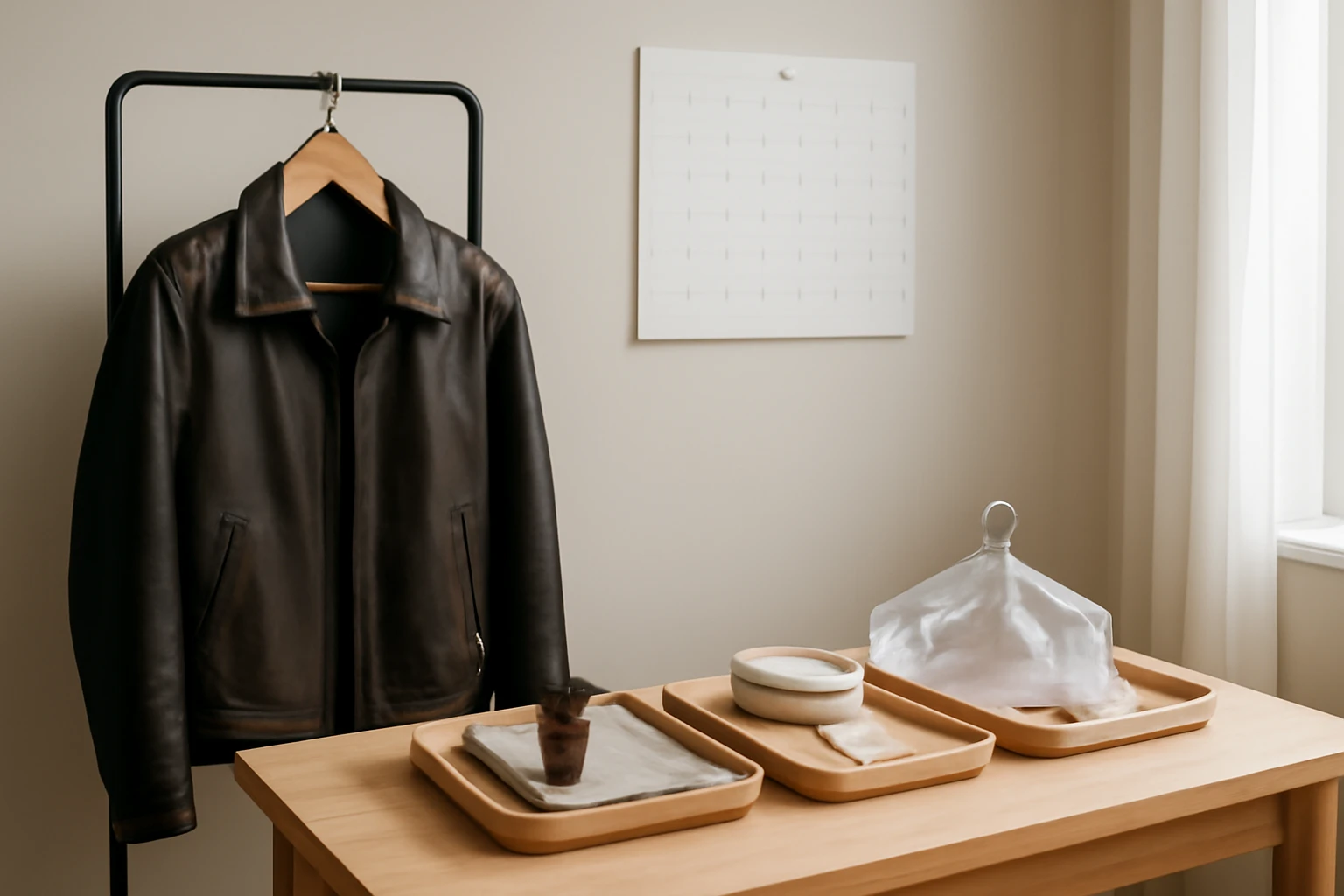
A clear schedule keeps a jacket in top condition. Below is a simple plan and a comparison of cleaning choices.
Recommended schedule
- After each wear: quick air and light brush for dust.
- Spot clean: immediate as stains appear.
- Every 6 months: light clean and condition for regular users.
- Every 12 months: deep clean for heavy users.
Comparison table
| Method | Cost | Effectiveness | Risk |
|---|---|---|---|
| Home spot clean | Low | High for small stains | Low when tested first |
| Home deep clean | Low to medium | Good for sealed leather | Medium; risk of over-wetting |
| Professional cleaning | Medium to high | Best for complex stains and repairs | Low if reputable service |
Choose a method based on the jacket’s value, type of stain, and your confidence.
Product recommendations and dilution ratios
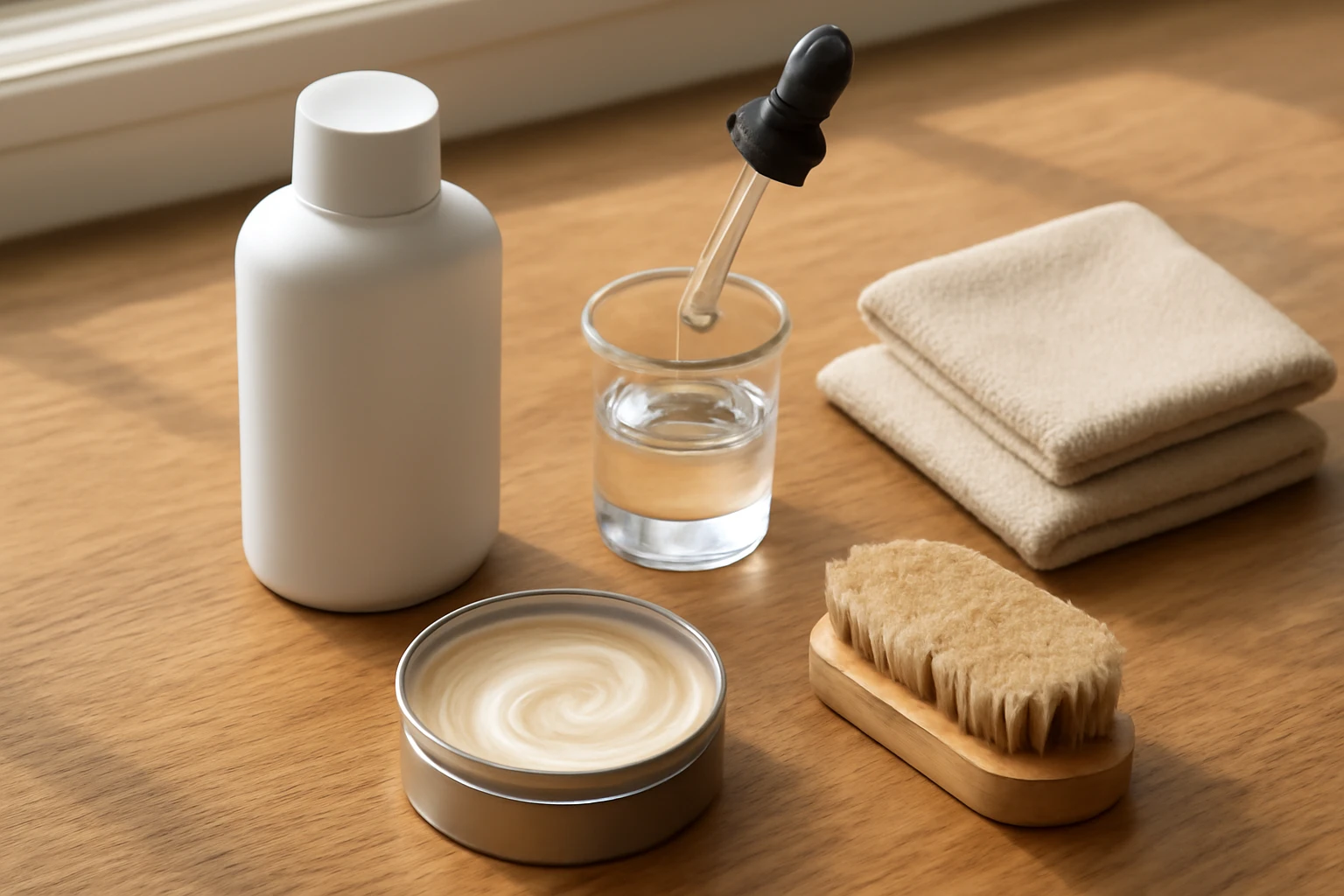
Use trusted leather products and follow exact dilution ratios when mixing.
Recommended items
| Product | Purpose | Typical dilution or use |
|---|---|---|
| pH-balanced leather cleaner | General cleaning | Use as directed; often 1:10 to 1:20 cleaner to water |
| Saddle soap | Deeper cleaning for durable leather | Use sparingly; follow product guide |
| Leather conditioner (neutral cream) | Restore oils | Apply thinly; do not exceed 2 coats per session |
| Distilled water | Rinse and dilute | Use 100% distilled for rinsing |
Simple home dilution examples
- Mild soap for sealed leather: 1 drop mild soap in 100 ml distilled water. Test first.
- Vinegar solution for salt stains: 1 part white vinegar to 1 part distilled water.
Notes on brands
We do not promote specific brands here. Choose products labeled for leather and check reviews from leather care specialists.
Final checklist before you start
- Test on a hidden area.
- Work on a clean, stable surface with good light.
- Use soft cloths and little liquid.
- Move slowly and evaluate results after each step.
Follow this plan and your leather jacket will remain safe, supple, and wearable for many years.
Frequently Asked Questions
Can I wash my leather jacket in a washing machine?
No. Machine washing will strip oils, warp structure, and damage finishes. Only some washable leather garments exist and they will be clearly labeled. For standard leather jackets, use spot cleaning and professional services.
Will conditioner change the jacket color?
Conditioners can slightly darken leather, especially lighter colors. Always test in a hidden area. Use conditioners formulated for your leather type and apply sparingly.
How do I remove ink from a leather jacket?
Fresh ink should be blotted, not rubbed. For set ink, test a leather-safe ink remover or a tiny amount of isopropyl alcohol in a hidden area. If unsure, have a professional handle it to avoid dye loss.
Is it safe to use saddle soap on all leathers?
No. Saddle soap works on certain durable, finished leathers but can dry or darken delicate aniline or very soft leathers. Check the leather type before use and test first.
How should I store my leather jacket long term?
Clean and condition before long storage. Use a wide padded hanger and a breathable garment bag. Store in a cool, dry place and check the jacket every 6 months.