To clean a kitchen sink drain, start by removing any visible debris and flush the drain with hot water. Treat buildup with a baking soda and vinegar mix or an enzyme cleaner, then use a plunger or a snake for stubborn clogs. Do a simple maintenance routine each month to avoid odors and slow drainage.
Key Statistics
- About 60% of household sink clogs are caused by grease and food scraps left down the drain.
- A basic snake or auger clears 70 to 90 percent of common kitchen clogs on the first try.
- Enzyme cleaners break down organic buildup in 24 to 72 hours and are safer for pipes than corrosive chemical cleaners.
Kitchen Drain Basics
Cleaning a kitchen sink drain is usually straightforward and needs only a few safe tools. You can fix many slow drains with items you already have at home. Wear gloves and take care when working around standing water.
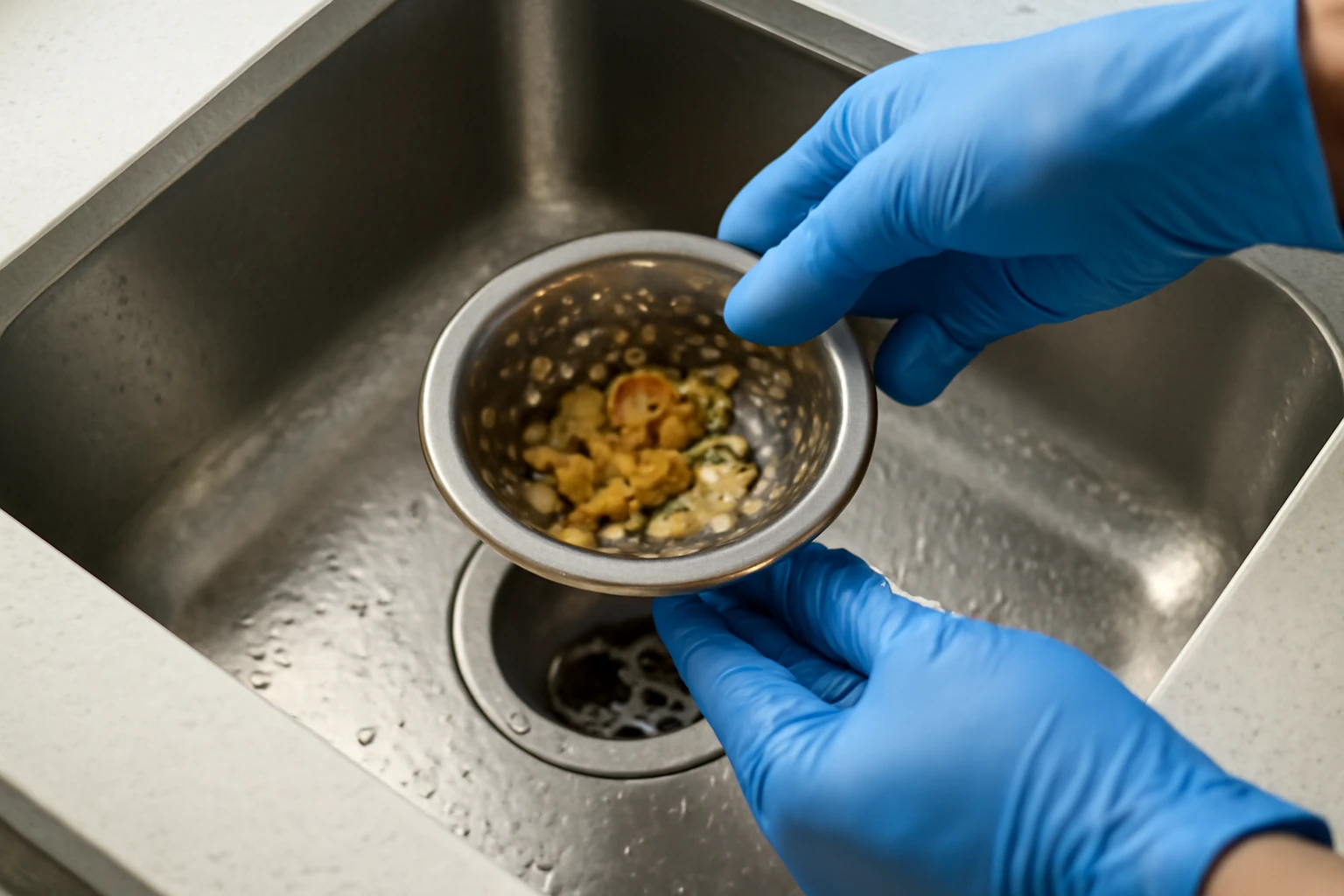
Tools and Materials You Need
Gather basic tools before you start. That saves trips and reduces mistakes.
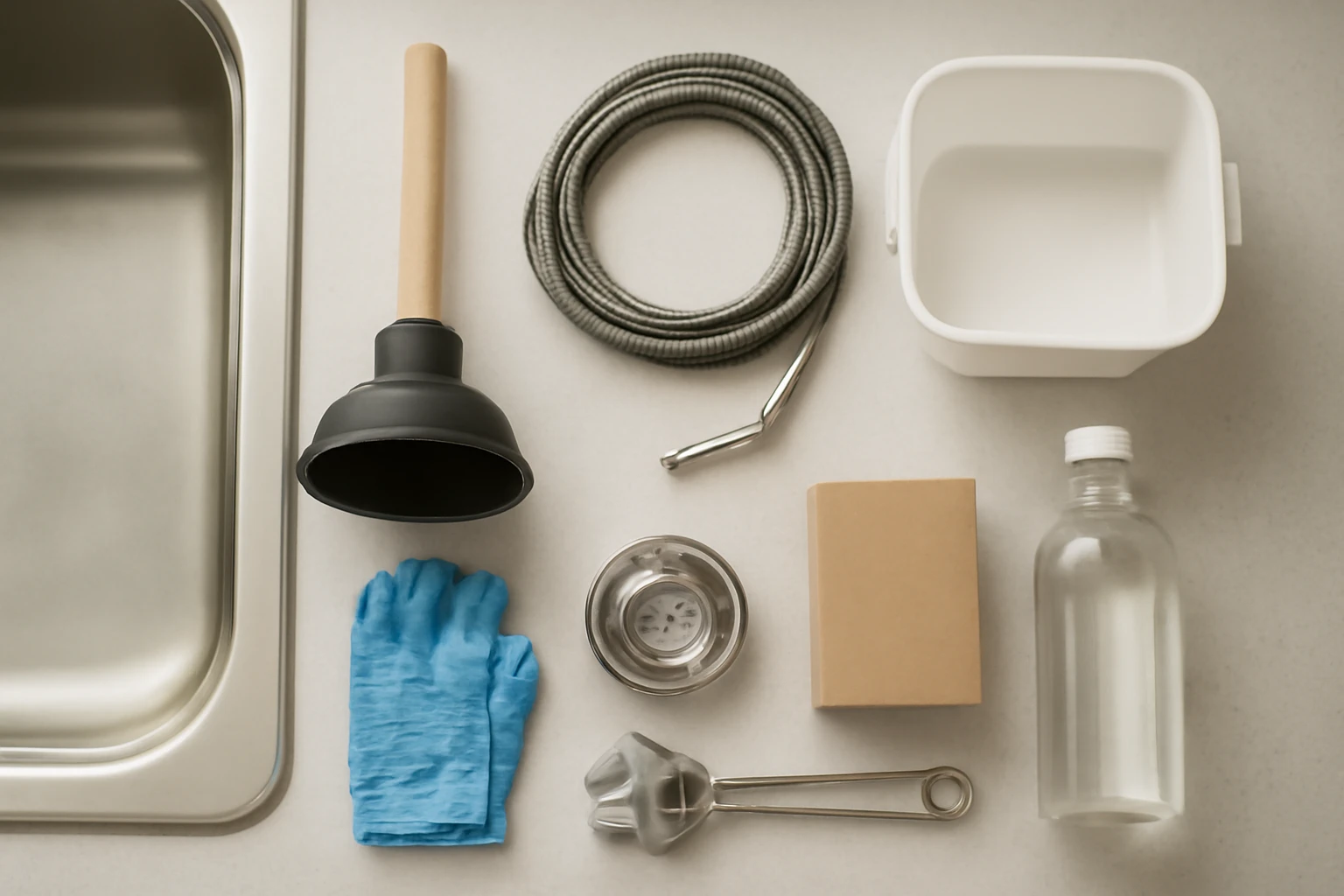
Tools and supplies
- Rubber plunger with flange
- Plumber’s snake or hand auger (3 to 6 mm cable for kitchen sinks)
- Bucket and old towels
- Nitrile gloves and safety glasses
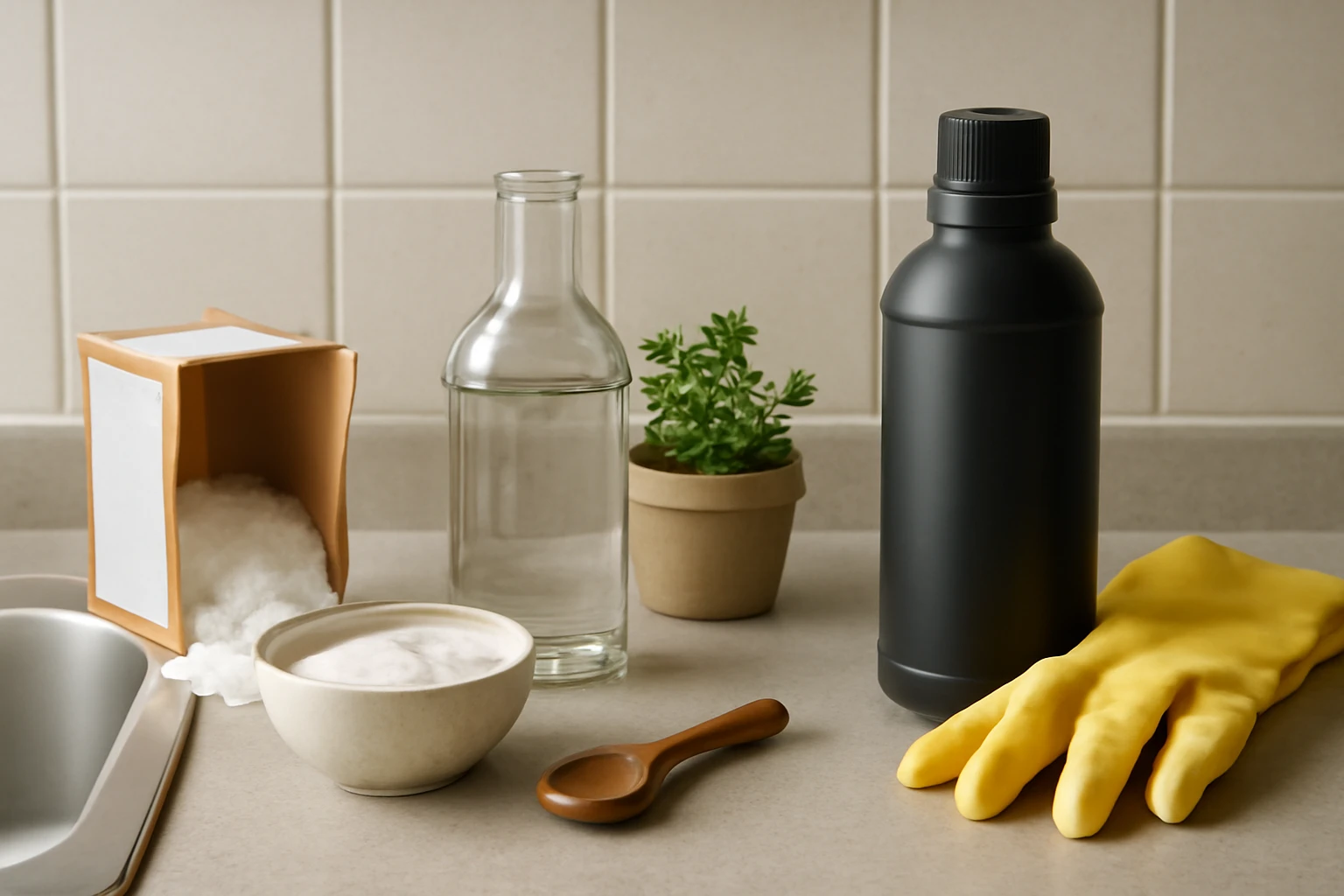
- Baking soda and white vinegar or enzyme drain cleaner
- Adjustable wrench and channel-lock pliers
- Sink strainer or mesh guard
When to choose professional tools
If you need a snake longer than 15 feet or more than one fixture is slow, call a plumber. In our experience, long or repeated clogs often point to a problem in the main line.
Step by Step Cleaning and Unclogging
Start with the least invasive methods and move to stronger options only if needed. Follow basic safety tips at each step.
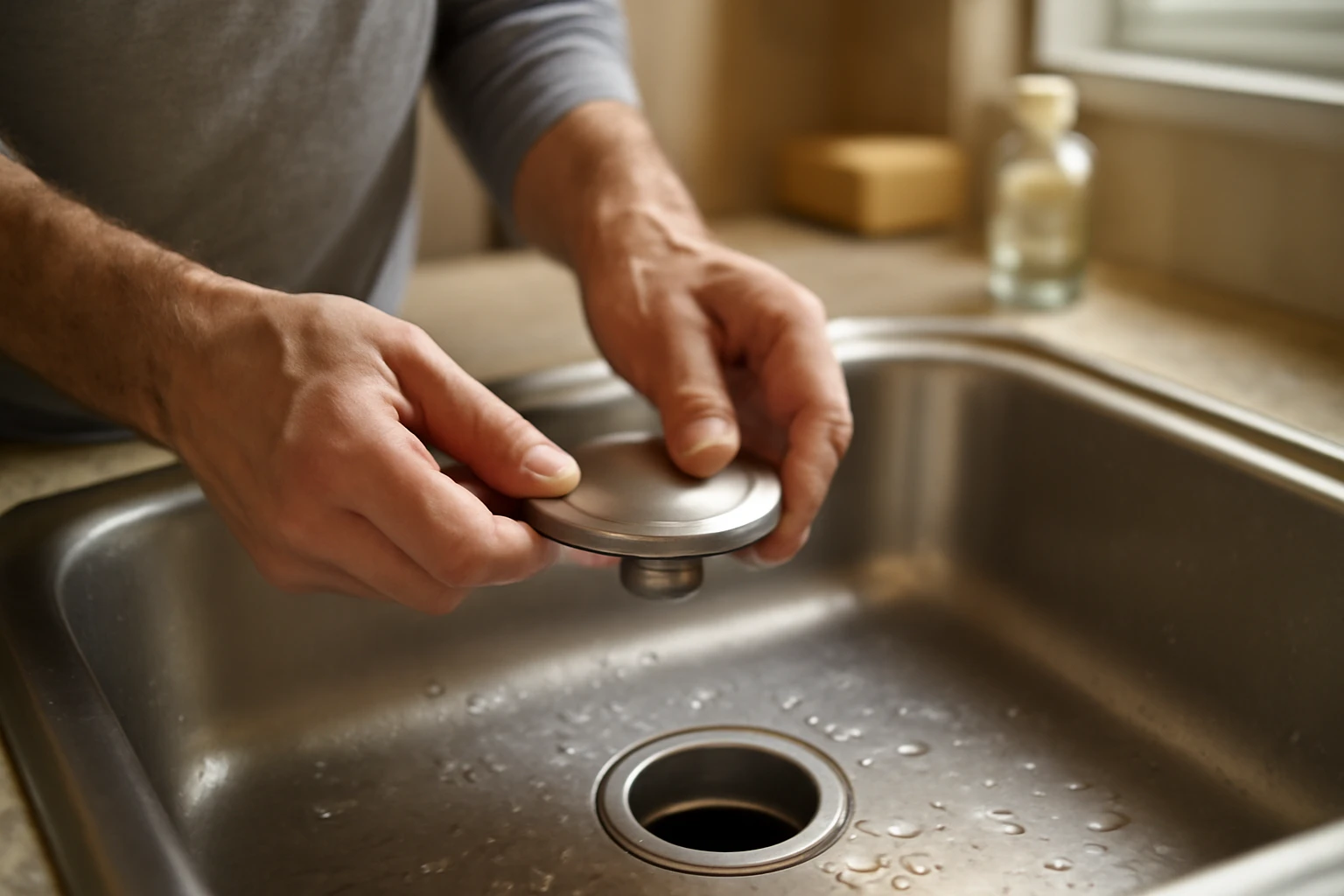
- Remove visible debris
- Put on gloves.
- Pull out the stopper or strainer and remove trapped food. Use a small brush to clean the basket.
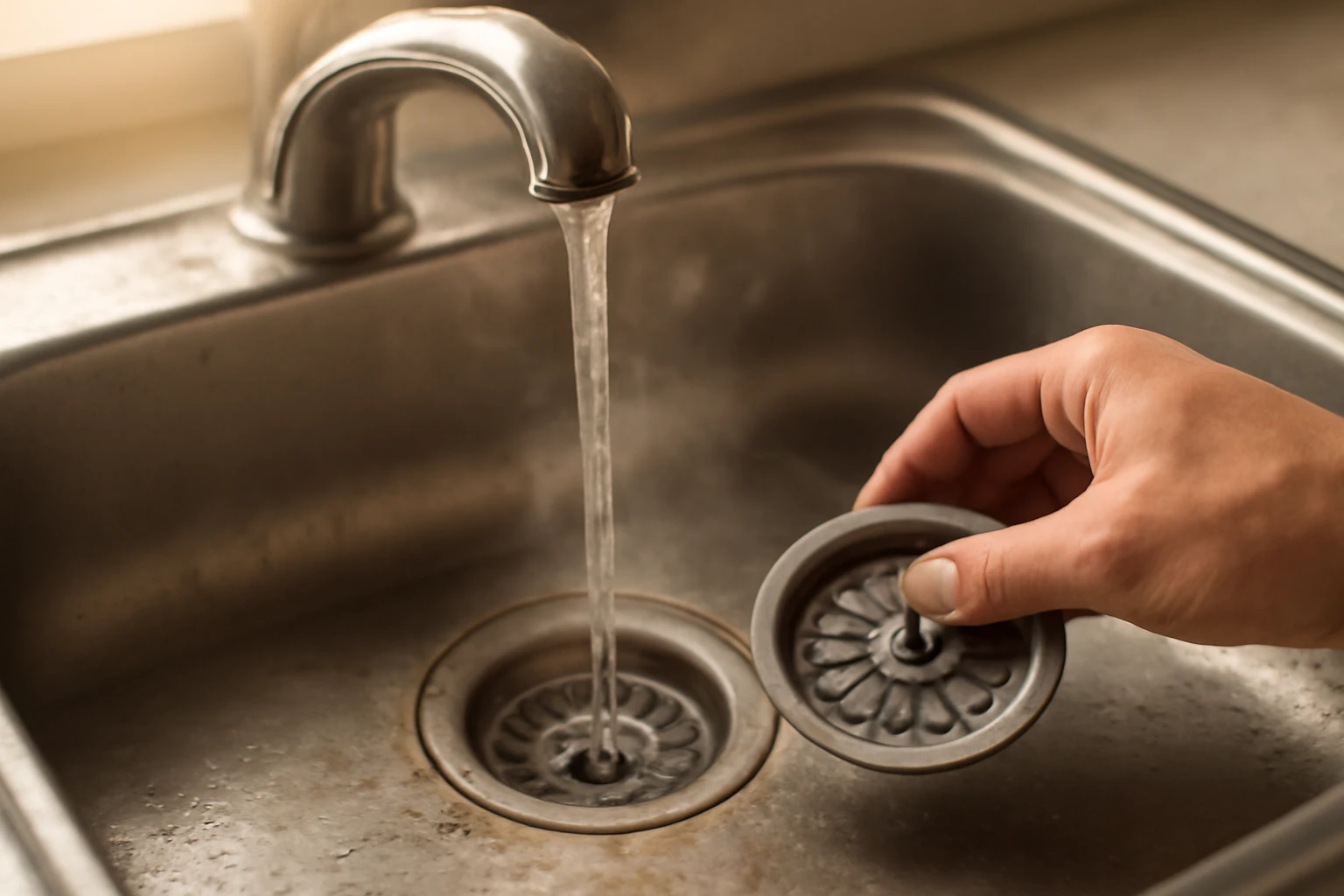
Hot Water Flush
Hot water can melt grease that sticks to pipe walls. Run the hottest tap you have for at least 30 seconds.
- Baking Soda And Vinegar Trap Clean
- Pour 1 cup baking soda into the drain.
- Follow with 1 cup white vinegar.
- Wait 5 to 15 minutes while it fizzes, then flush with hot water.
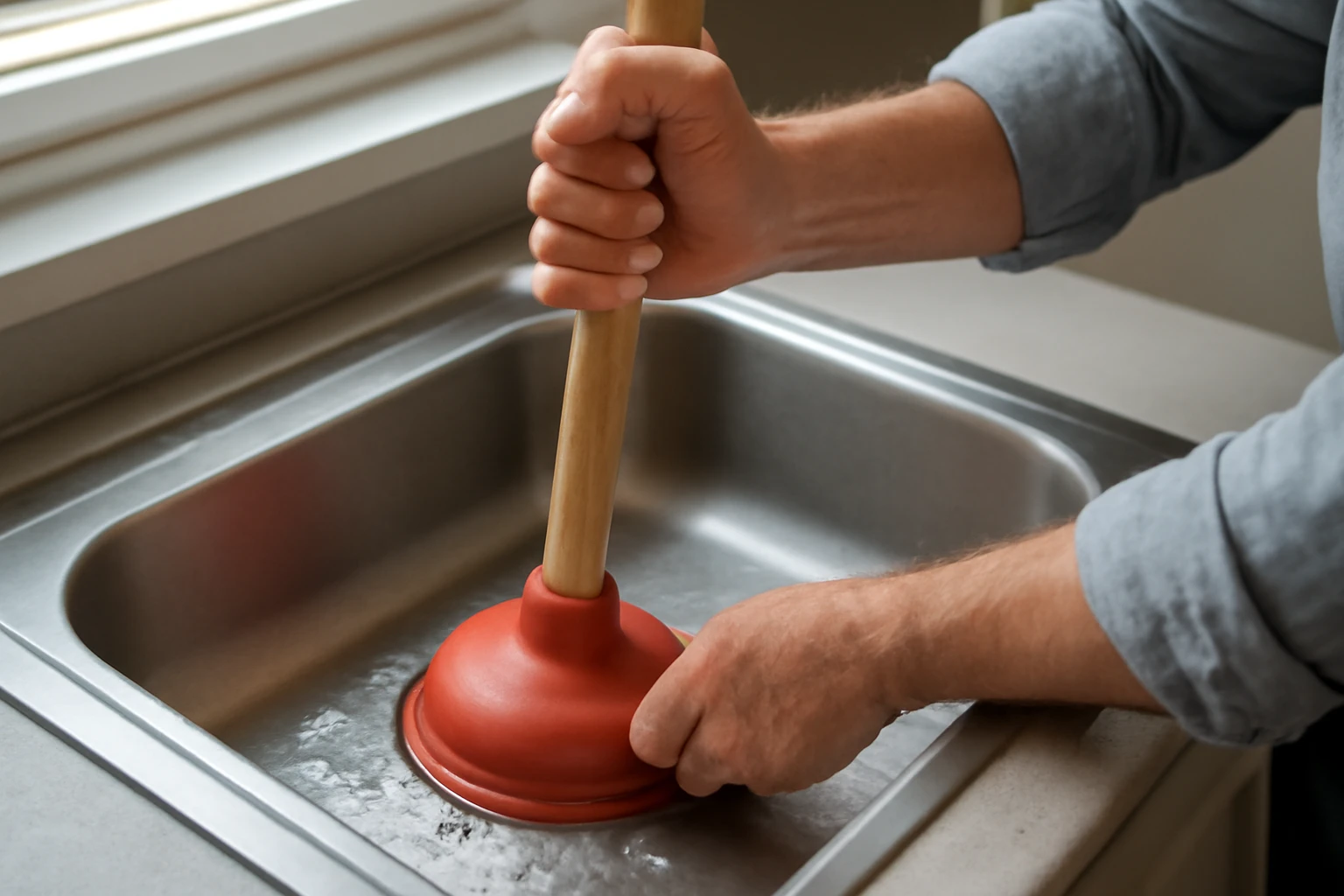
Use a Plunger
A plunger will often clear the clog if the trap or nearby pipe is the issue. Seal any overflow openings and use a few firm pumps to dislodge the blockage.
- Plumber’s Snake or Hand Auger
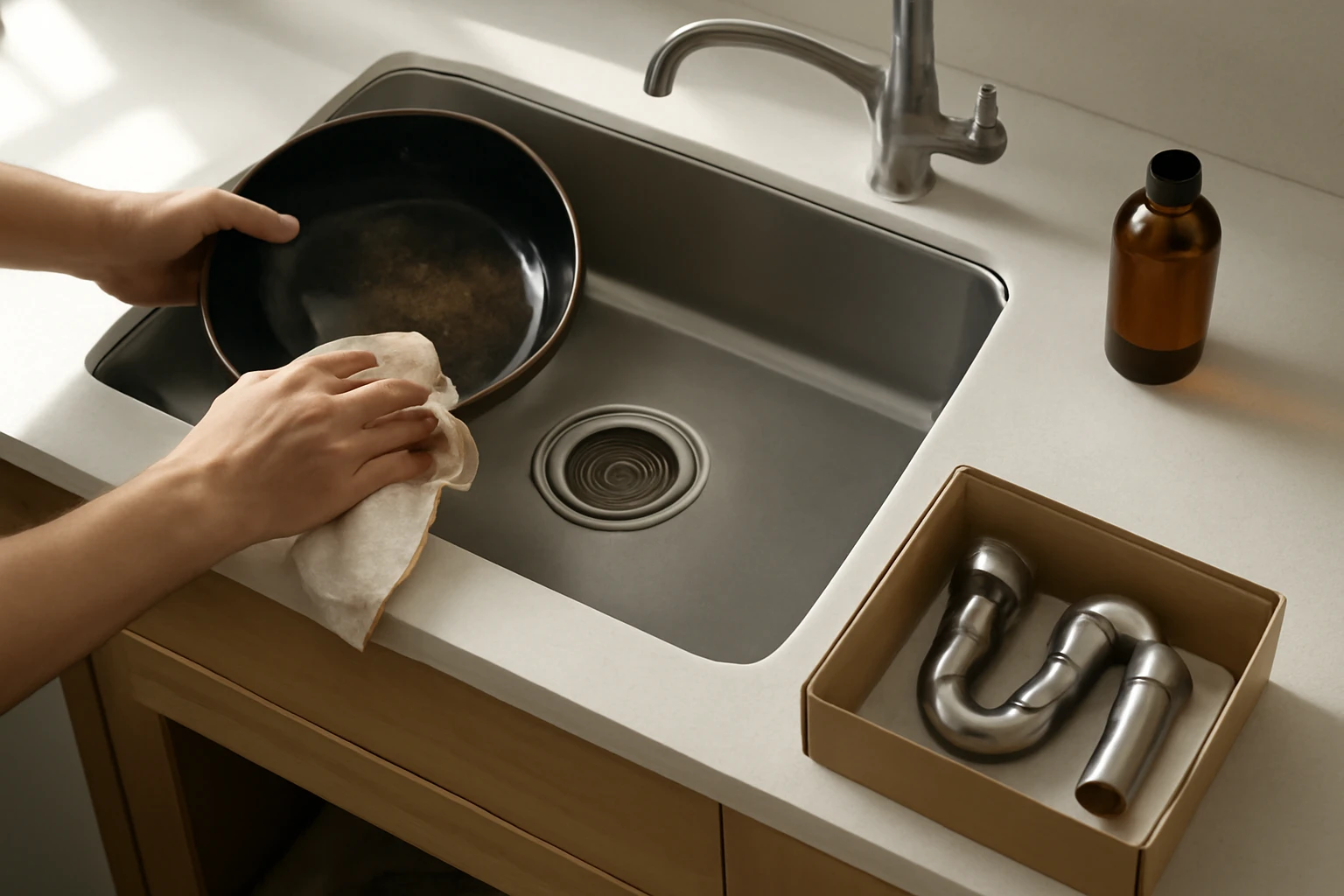
- Remove the P-trap if you can access it safely. Place a bucket below.
- Feed the snake into the drain and rotate to catch the clog, then pull it back slowly.
- Reassemble the P-trap and test the drain.
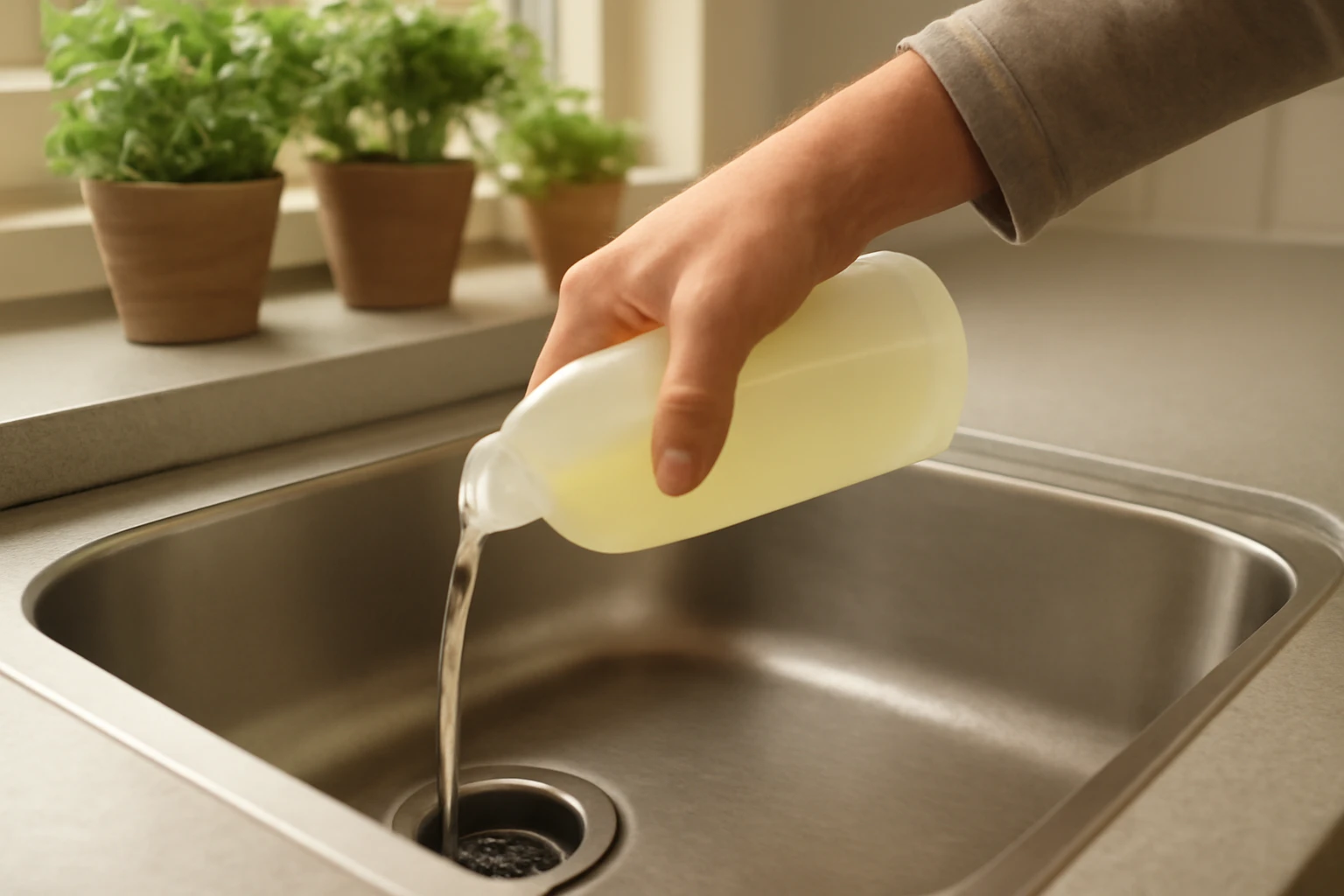
Using an Enzyme Cleaner
Enzyme cleaners break down organic buildup. They take longer but are gentle on pipes. Follow the label directions and allow the cleaner time to work, often overnight.
- Final Flush And Test
After any mechanical or chemical method, flush the drain with hot water for a minute. Run the tap and check for lingering slow drainage or unusual noises.
Natural Cleaners Compared with Chemical Cleaners
Natural options are kinder to pipes and the environment. Chemical cleaners can act faster but may damage pipes and produce strong fumes.
Comparison table
| Cleaner Type | Effectiveness On Grease | Safety For Pipes | Typical Cost | Best Use Case |
|---|---|---|---|---|
| Baking soda + vinegar | Medium | High | $1 to $3 per use | Regular maintenance and odors |
| Enzyme cleaner | Medium to high | Very high | $6 to $15 per bottle | Organic buildup, ongoing maintenance |
| Caustic chemical cleaner | High on hair and grease | Low to medium | $5 to $12 per bottle | Severe clogs when other methods fail |
| Professional drain service | Very high | Depends on method | $100 to $350 | Deep blockages, main line issues |
Use enzyme cleaners for routine care. Reserve caustic chemical cleaners for last-resort situations and follow safety directions strictly.
Preventive Maintenance Schedule
A few simple tasks can stop most clogs and odors before they start.
Weekly tasks
- Run hot water after dishwashing.
- Wipe greasy pots before washing.
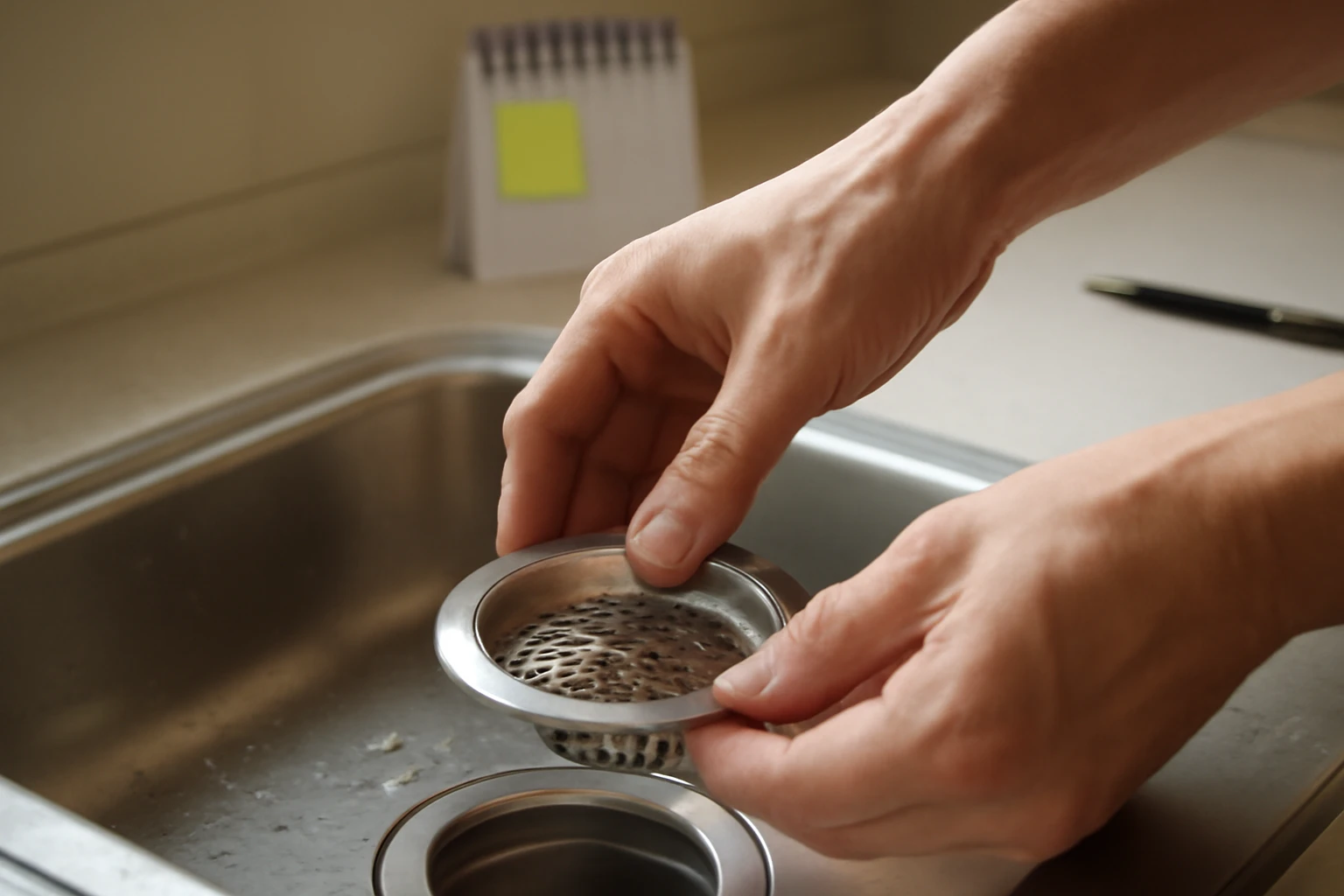
- Clean the strainer.
Monthly tasks
- Flush drains with baking soda and hot water or use an enzyme cleaner.
- Check under-sink connections for leaks.
Quarterly tasks
- Inspect the P-trap for buildup and clean if needed.
- Consider a longer snake run for preventive clearing.
When to Call a Plumber
Call a professional if basic steps do not fix the problem or if more than one fixture is affected.
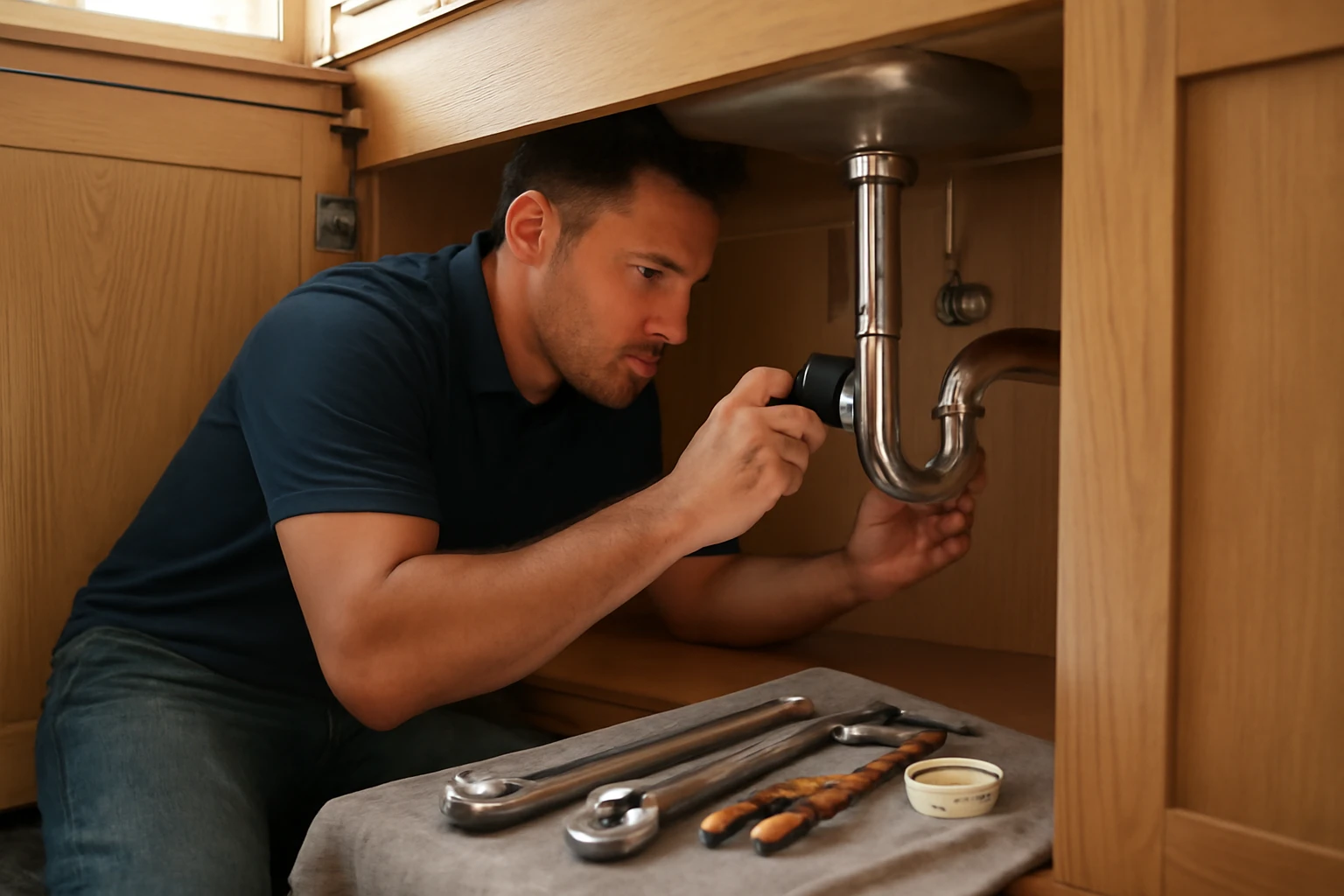
Signs you need help
- Water backs up in several drains at once.
- Foul sewage odor persists.
- Repeated clogs in a short time.
- Visible leaks or corroded pipes.
A common mistake is waiting too long. Early action often avoids more costly repairs.
Common Mistakes and Safety Tips
Avoid habits that harm pipes or create hazards.
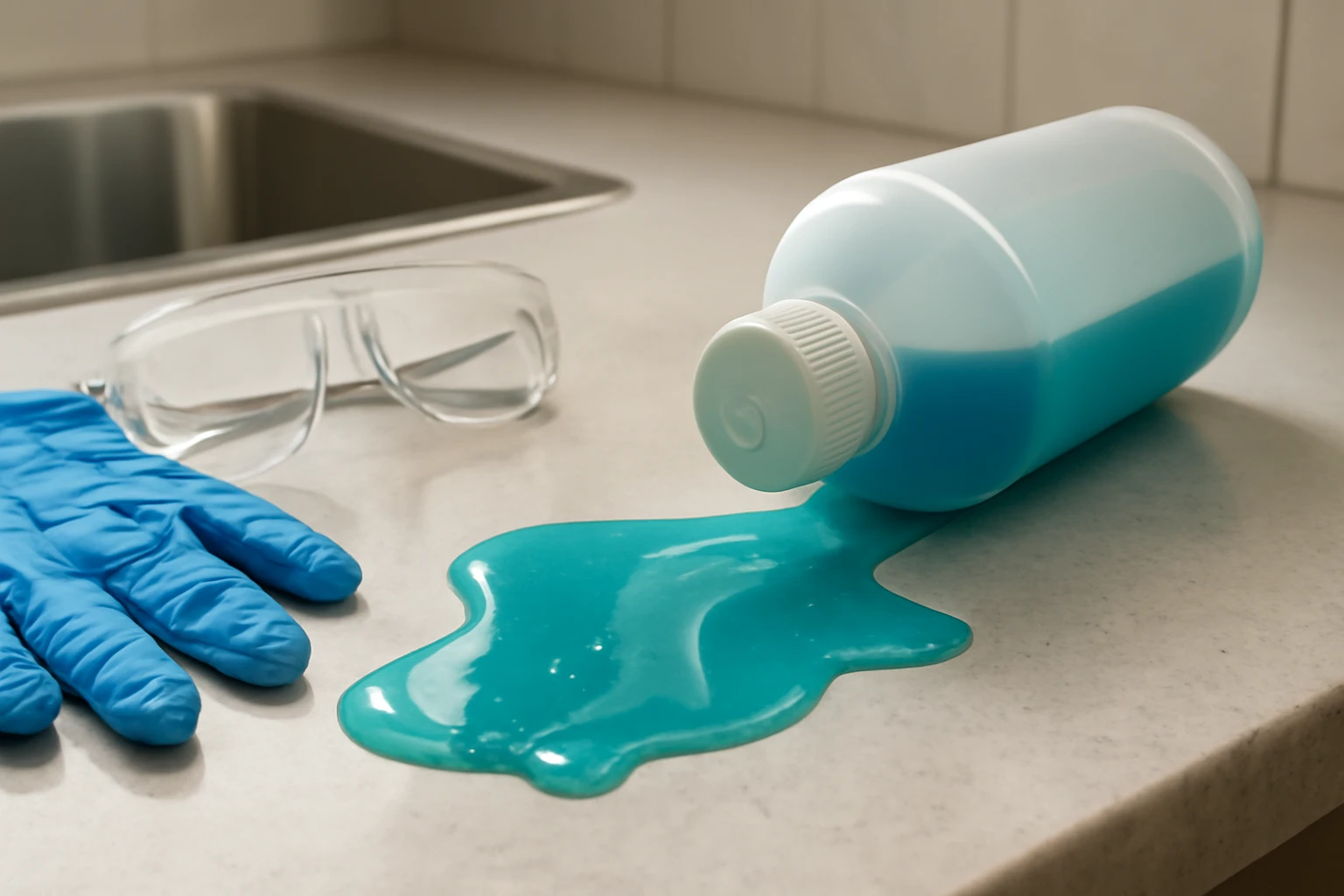
Mistakes to avoid
- Pouring boiling water into PVC pipes can soften them if the water is superheated.
- Using chemical cleaners repeatedly can damage pipe joints and seals.
- Forcing a snake without knowing what it hit can break a trap or push the clog deeper.
Safety tips
- Wear gloves and eye protection when handling chemicals.
- Ventilate the area when using strong cleaners.
- Use a bucket when removing the P-trap to catch water and debris.
Cost Time and Environmental Impact
Plan costs and time for common drain tasks. Choose options that fit your budget and environmental concerns.
Cost and time table
| Task | Typical Time | Typical Cost | Environmental Note |
|---|---|---|---|
| Clear debris and flush | 5 to 15 minutes | $0 to $5 | Low impact |
| Baking soda and vinegar | 20 to 40 minutes | $1 to $3 | Low impact |
| Use a snake | 10 to 40 minutes | $0 to $30 (tool cost) | Low if mechanical |
| Chemical cleaner | 10 to 30 minutes | $5 to $12 | High impact, toxic runoff |
| Professional service | 1 to 3 hours | $100 to $350 | Depends on methods used |
Enzyme cleaners are gentler on local water systems. Mechanical clearing is usually the best environmental choice when it is an option.
Quick Troubleshooting Table
Match symptoms to likely causes and next steps.
| Symptom | Likely Cause | First Step |
|---|---|---|
| Slow drain only in one sink | Local grease or debris | Remove stopper and clear debris, plunger |
| Slow drains in multiple fixtures | Main line blockage | Call plumber |
| Gurgling noise | Vent or trap issue | Run water to test, check venting if safe |
| Bad rotten egg odor | Organic decay in trap | Clean trap, enzyme treatment |
Final Tips and Best Practices
Keep a strainer in the sink and empty it often. Wipe greasy pans before washing. Use an enzyme cleaner monthly if you cook with a lot of oil. Replace old traps and seals when you find corrosion.
If basic methods do not clear the drain, calling a licensed plumber usually saves time and prevents damage. Small, regular steps prevent most problems.
Frequently Asked Questions
How Often Should I Clean My Kitchen Sink Drain?
Clean the strainer weekly and flush the drain with hot water every week. Use a baking soda treatment or enzyme cleaner once a month if you cook with oils often.
Will Baking Soda and Vinegar Damage My Pipes?
No. Baking soda and vinegar are safe for metal and plastic pipes. They help remove light buildup but may not clear severe clogs.
When Should I Avoid Chemical Drain Cleaners?
Avoid chemical cleaners if you have old corroded pipes, PVC joints, or if the clog is near the fixture. Use mechanical methods or call a plumber instead.
Can I Remove the P-trap Myself?
Yes, if you are comfortable with basic tools. Put a bucket under the trap, loosen slip nuts, and inspect for debris. If the connections are corroded or leaking, call a professional.
What Is the Safest Way to Prevent Grease Clogs?
Wipe grease from pans before washing and pour small amounts of hot water while running the disposal or drain. Use a strainer to catch solids and perform monthly enzyme treatments.